
CDD-BS59KU vs CDD-BS5JMU: Analog or Digital for Race Builds?
The decision in one line: pick the analog IRLAB CDD-BS59KU when the build must fly in low light, indoors or on a tight mass budget, and pick the digital IRLAB CDD-BS5JMU when the build flies in daylight and recorded footage must hold up at 1080p90 or 720p120. Both cameras are specified at a 120° field of view, so the choice rests on five other documented attributes: resolution, minimum illumination, mass, latency and housing material.
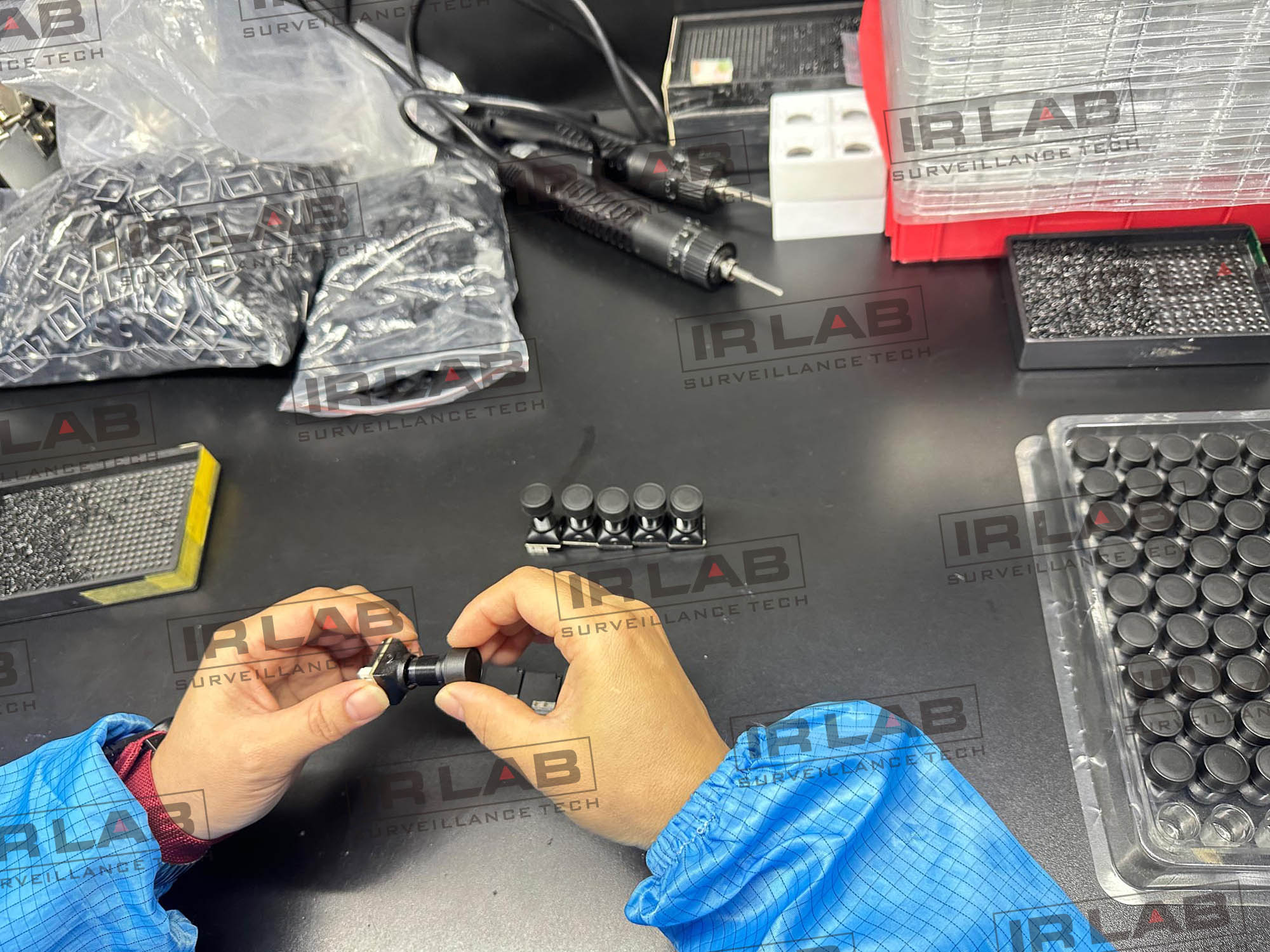
IRLAB Limited is a camera manufacturer founded in 1992 in Taiwan and established in Shenzhen in 2003, with more than 30 years of camera development and manufacturing behind it. Both models come from the same production base, which makes this an unusual comparison: the supplier is fixed and the pilot is not choosing a vendor. The pilot is choosing the video chain the airframe will carry for a season, and that decision reaches further than the camera itself.
The question behind the question
"Analog or digital?" is convenient shorthand, but it is not the decision a racing pilot actually makes. The real decision is which video chain the build will run for the season.
A camera determines the transmitter or air unit it feeds, the antenna set, the goggles, the wiring harness and the spares that travel to a race. Once those are bought, changing camera class means changing the chain. That is why the camera decision tends to be made once per build rather than once per race, and why it is worth an hour of comparison before ordering.
This article stays deliberately narrow: two IRLAB models, one analog and one digital, both at 120° field of view, assessed on the documented facts that change what a racing build can do. It is not a general essay on analog versus digital video, and it does not assume that either approach is superior outside the missions described.
Industry background: why the camera decision comes first
FPV cameras are a small but commercially distinct category. Fact.MR's headline estimate places the global FPV camera market at US$825.3 million in 2024. That is a commercial-research figure whose product sub-segments, revenue basis and growth rate were not available in the material reviewed here, so it functions as an order-of-magnitude reference rather than a planning number.
For a build, the more useful observation is that the category splits into separate chains rather than separate price tiers. Analog cameras feed analog transmitters, digital cameras feed digital air units, and thermal or night-vision cameras serve different roles again. Published 2026 figures for complete digital HD systems (DJI, Walksnail, HDZero) place glass-to-glass latency in the 22–40 ms range, according to commercial research from Straits Research — a system-level figure, reported at medium confidence, that covers camera, link and goggles together.
That number explains why a camera datasheet alone cannot settle a build. A camera's stated latency is one contribution to a chain, and comparing a camera-level figure with a system-level range compares two different measurements. The rest of this guide keeps those levels apart.
The two models, as documented
CDD-BS59KU — analog
- Resolution: 1500TVL, analog horizontal resolution expressed in TV lines.
- Minimum illumination: 0.00001LUX.
- Weight: 9 g.
- Field of view: 120°.
- Housing: aluminum alloy.
CDD-BS5JMU — digital
- Image sensor: SONY.
- Output modes: 3840×2160 at 30fps, 1080p at 90fps, 720p at 120fps.
- Field of view: 120°.
- Stated glass-to-glass latency: 50 ms.
Two attributes are noticeably absent from the digital sheet. No minimum illumination figure and no weight appear in the material reviewed for the CDD-BS5JMU. Their absence is not evidence of weak low-light performance or of a heavy body; it means those two questions cannot be answered from the specification and must be put to the manufacturer.
| Attribute | CDD-BS59KU (analog) | CDD-BS5JMU (digital) |
|---|---|---|
| Signal class | Analog | Digital |
| Resolution / output | 1500TVL | 3840×2160@30fps, 1080p@90fps, 720p@120fps |
| Image sensor | Not stated in material reviewed | SONY image sensor |
| Minimum illumination | 0.00001LUX | Not stated in material reviewed |
| Weight | 9 g | Not stated in material reviewed |
| Field of view | 120° | 120° |
| Housing | Aluminum alloy | Not stated in material reviewed |
| Glass-to-glass latency | Not stated in material reviewed | 50 ms |
The table is the whole of the documented difference. Everything else in this guide is about what those rows mean for a race build, and about the questions the rows leave open.
Where the differences actually change a race build
Light handling: the sharpest documented gap
0.00001LUX is the most decision-relevant figure in this comparison because it is the one capability the two sheets do not share. It is also a figure that becomes comparable only when the conditions behind it are known: the lens aperture, the gain applied and the signal level at which the image is still judged usable all change the number. The material reviewed states the lux figure for the analog model but not those conditions, and states no figure at all for the digital model.
The honest reading is therefore narrow. IRLAB publishes a very low minimum illumination figure for the CDD-BS59KU and publishes none for the CDD-BS5JMU. A pilot whose races run at dusk, under floodlights or indoors has documented grounds to start with the analog model, and should ask IRLAB for the digital model's low-light behaviour before assuming that a SONY sensor closes the gap.
Mass: 9 g against an unpublished figure
The analog model's 9 g matters because racing mass compounds. Every gram at the camera is a gram the frame, battery and motors lift and have to accelerate out of a corner. A 9 g camera is light by any FPV standard, and the aluminum alloy housing means that 9 g is carried in a metal body rather than a plastic one.
The digital model's weight is not stated in the material reviewed. That is a verification item, not a verdict, and there is a second mass question worth asking in the same email: whether the camera is supplied as a single unit or as a split camera-and-main-board assembly. IRLAB documents one such split format at 26 g net, made up of a 9 g section and a 17 g section, with a 19 × 19 × 26 mm camera, a 32 × 32 × 12 mm main board and 25.5 × 25.5 mm mounting hole spacing. Where a build uses a split format, the whole assembly is what the airframe carries, so the useful question is not "how much does the camera weigh?" but "what is the installed mass of this exact SKU in this configuration?"
Resolution and frame rate: TV lines are not pixels
1500TVL and 3840×2160 are not the same kind of number and cannot be ranked against each other. TVL describes horizontal resolution in an analog signal and is not a pixel count. The digital model's three modes describe actual output formats, and the frame-rate ladder matters more for racing than the headline resolution: 1080p90 and 720p120 sample the scene far more often per second than 30fps, which is what motion clarity and post-race frame-by-frame review depend on.
The practical question is whether the pilot needs recorded footage at all, and at what frame rate. A pilot racing purely on live video is choosing a camera for what appears in the goggles; a pilot whose footage is published, reviewed or judged is choosing an output format. The CDD-BS5JMU documents higher-resolution, higher-frame-rate output. The CDD-BS59KU documents an analog resolution figure with no stated digital output.
Latency: what 50 ms covers and what it does not
The CDD-BS5JMU carries a stated 50 ms glass-to-glass latency, which should be read as a camera-level claim: the time from light entering the lens to the image appearing at the camera's output. It does not describe the full chain a pilot experiences, which also includes the air unit, the radio link and the goggles.
That distinction matters because the widely quoted 22–40 ms range for digital HD systems is a system-level figure. The two numbers are not measured on the same basis, and subtracting one from the other would be a category error. What the 50 ms figure does establish is that IRLAB publishes a latency number for the digital model, which is the right starting point for a race build: ask for the camera-level figure and the system-level figure separately, then compare like with like. For the analog model no latency figure appears in the material reviewed, so the same question applies.
Field of view: a genuine tie at 120°
Both cameras are specified at 120° field of view. In a comparison built on differences, this is the attribute that does not separate them: if 120° is the framing a pilot wants, neither model forces a compromise on that point, and the decision falls entirely to the other criteria. One caution applies. The figure is stated as a single number, without saying whether it is measured diagonally or horizontally and without a lens distortion profile, so identical numbers should not be treated as identical optical rendering until IRLAB confirms the measurement basis.
Housing: aluminum alloy on one side
Racing cameras meet gates, ground and other quads. The CDD-BS59KU's aluminum alloy housing is a documented material fact and the kind of specification that matters on a frame that regularly impacts objects. The CDD-BS5JMU's housing material is not stated in the material reviewed, so no durability comparison can be drawn from the sheets — only a question to ask.
Step-by-step: settling the choice in one build session
- Write down the light conditions the races actually run in. If most heats are flown in daylight, the digital model's output advantage is available at no documented cost. If dusk, indoor or floodlit venues dominate, the analog model's 0.00001LUX figure is the only low-light number either sheet provides.
- Lock the video chain before the camera. An analog camera feeds an analog transmitter; a digital camera feeds a digital air unit. Decide which chain the build will run, then buy the camera that belongs to it rather than the other way round.
- Weigh the installed assembly, not the camera alone. The analog camera is 9 g. For the digital model, ask for the installed mass of the exact SKU, including any split camera-and-board format, before committing a mass-limited frame.
- Decide whether footage has to be recorded, and at what frame rate. 1080p90 and 720p120 are documented on the digital model; the analog model documents 1500TVL with no stated digital output. Match the output to what happens to the footage after the race.
- Separate camera latency from chain latency. Request both figures for whichever model is shortlisted, and treat a camera-level number and a system-level range as different measurements.
- Check the physical integration. Mounting pattern, camera dimensions, board dimensions where a split format applies, housing material and how the camera attaches to the specific frame.
- Plan spares before the first race. A racing season involves crashes. Confirm which model can be re-ordered mid-season and how quickly, because a camera you cannot replace is a camera you cannot race.
Build profiles: which mission fits which model
The table below maps typical racing missions to the model whose documented attributes fit them. It is a fit statement, not a ranking: neither model is positioned as better overall, and each row can be overturned by the verification items in the next section.
| Race mission | Documented fit | Reason from the specifications |
|---|---|---|
| Night, dusk or indoor racing | CDD-BS59KU | 0.00001LUX minimum illumination is the only low-light figure published for either model |
| Mass-limited or lightweight build | CDD-BS59KU | 9 g camera in an aluminum alloy housing |
| Daylight racing with published or judged footage | CDD-BS5JMU | 1080p90 and 720p120 output from a SONY image sensor |
| Mixed season on one airframe | Depends on the digital low-light figure | The analog figure is published; the digital figure is not, so the comparison is incomplete until it is obtained |
| Build already running analog video gear | CDD-BS59KU | Keeps transmitter, antennas and goggles unchanged |
Who makes both cameras, and why it matters to the decision
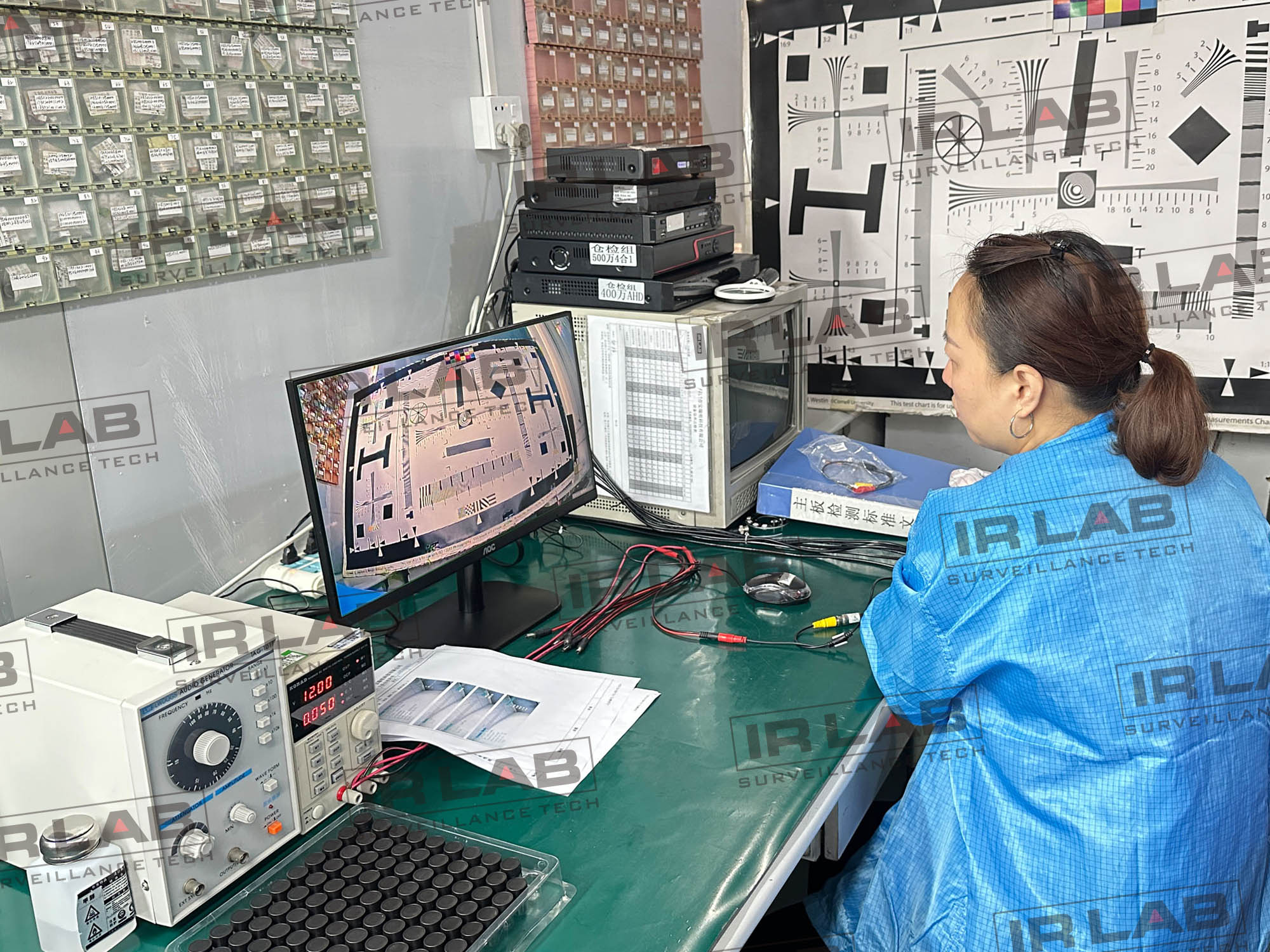
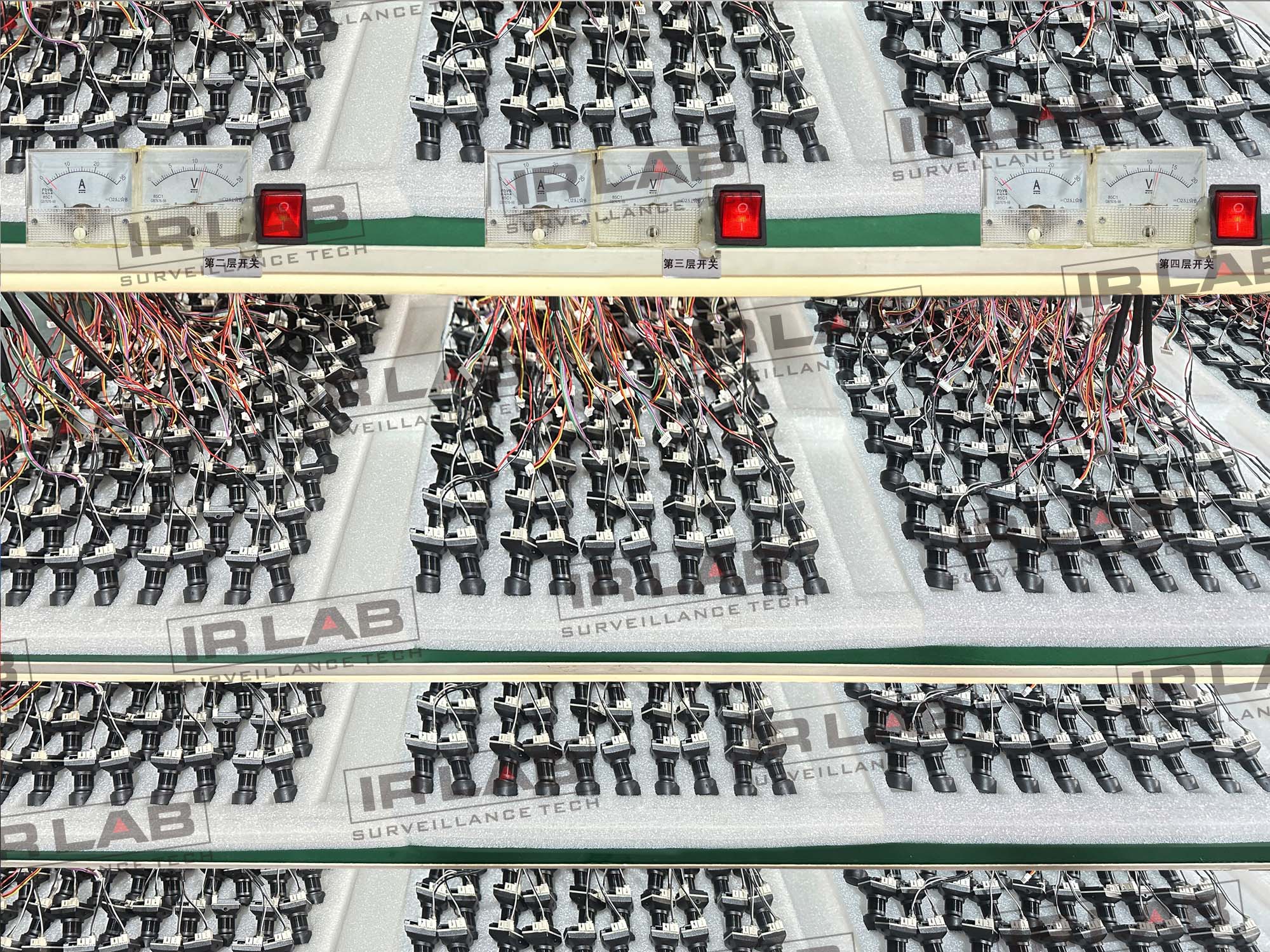
Because both models come from IRLAB Limited, the choice is about mission rather than about switching suppliers. The company operates a 3,000 m² facility with more than 100 employees, including 10+ engineers, and reports an annual output of 6 million cameras, with roughly 70% exported to Europe, the USA, Japan, Korea and Taiwan. Its quality management system is certified to ISO 9001 by TÜV, and software, hardware, mechanical structure, video image tuning and quality control are handled in house, alongside OEM and ODM services.
For a buyer comparing two models from one supplier, the relevant point is continuity rather than brand preference. IRLAB documents chip lifecycle management that tracks original manufacturer discontinuation notices and product roadmaps, a chip-replacement procedure that reserves compatible package or pin-compatible options during new product design, and replacement drills on mass-produced products that produce a closed-loop verification report. That is a supply-continuity measure rather than an imaging specification, but it is the kind of detail that decides whether a camera class is still buyable eighteen months after the build is finished.
What the specifications do not tell you
Every comparison has an edge, and this one has a clear edge. The following items are not stated in the material reviewed and should be treated as open questions rather than as known weaknesses:
- The measurement conditions behind the 0.00001LUX figure — lens aperture, gain and signal criterion.
- The digital model's minimum illumination.
- The digital model's weight and housing material.
- The analog model's latency.
- Power consumption and input voltage range for either model.
- Whether the 120° figure is diagonal or horizontal, and the lens distortion profile.
- Model-level certification for either SKU.
- Price, MOQ and lead time for either model.
Each of these is a question for IRLAB rather than a reason to guess. A specification gap filled by assumption is how a build ends up with a camera that does not match its chain.
Mission-based decision checklist
Run this before ordering either camera. Each box corresponds to a documented fact or an open question identified above.
- ☐ The race calendar is written down and the dominant light condition is identified.
- ☐ The video chain — transmitter or air unit, antennas, goggles — is chosen before the camera.
- ☐ The installed mass of the exact SKU is confirmed, not only the camera-alone figure.
- ☐ Low-light behaviour is confirmed for the digital model if a night or mixed season is planned.
- ☐ Camera-level and system-level latency figures are both on file.
- ☐ The mounting pattern and camera dimensions match the frame.
- ☐ Housing material is confirmed for the model chosen.
- ☐ The required recorded frame rate is confirmed as available.
- ☐ Spare availability for the season is confirmed.
- ☐ Model-level certification for the destination market is on file.
Frequently asked questions
What certification should I verify before ordering either camera?
IRLAB holds ISO 9001 certification for its quality management system from TÜV, which describes how the cameras are manufactured rather than what an individual model is approved for. The material reviewed for this comparison does not state model-level certification for the CDD-BS59KU or the CDD-BS5JMU, and approval of the complete aircraft or its radio link is a separate question from the camera. Request the current declaration for the exact SKU and the destination market before shipping.
Which model is the better night-racing camera?
On the documented evidence, the CDD-BS59KU. Its 0.00001LUX minimum illumination is the only low-light figure published for either model, and the digital model's sheet carries no equivalent number in the material reviewed. That is a statement about published specifications, not a measured verdict on the SONY sensor, which may perform better than its sheet suggests. Pilots who race mainly at night should confirm the digital model's low-light behaviour before ruling it out.
Can I move the digital model into a build wired for the analog one?
Only with a chain change. The two models sit on different sides of the video architecture: the CDD-BS59KU is analog and the CDD-BS5JMU is digital, so the transmitter or air unit, antennas and goggles that serve one will not serve the other. Treat a class change as a rebuild of the video system rather than a camera swap.
Is 50 ms glass-to-glass fast enough for racing?
It is a camera-level figure, so it cannot answer the question on its own. What a pilot experiences is the sum of camera, air unit, link and goggles. The correct comparison is between complete systems measured the same way. Ask IRLAB for the system-level latency of the complete chain you intend to fly, and set that against the 22–40 ms system-level range published for other digital HD systems in 2026.
Which model costs less to run across a season?
No price appears in the material reviewed for either model, so the answer depends on quotation rather than published data. The sound approach is to cost the whole chain — camera, transmitter or air unit, antennas, goggles, spares and the effort of a mid-season class change — rather than the camera alone. A cheaper camera inside an incompatible chain can be the more expensive decision.
How should I validate and order?
Shortlist on the two facts that cannot be changed later: the light conditions of the races and the video chain already owned or planned. Then request the missing data for the shortlisted model — installed mass, low-light behaviour, system latency, power requirements and model-level certification — and confirm spare availability for the season. IRLAB handles OEM and ODM enquiries through sales@irlab.net and WhatsApp on +86 13502860860. The full product range and company capabilities are set out in the IRLAB Company Profile & Corporate Brochures, which can be downloaded and shared with a build team.
Conclusion: decide by mission, not by technology label
Analog versus digital is a label, not a decision rule. The CDD-BS59KU documents a 1500TVL analog signal, a 0.00001LUX minimum illumination figure, a 9 g mass in an aluminum alloy housing and a 120° field of view. The CDD-BS5JMU documents a SONY image sensor, 3840×2160 at 30fps, 1080p at 90fps and 720p at 120fps output, a stated 50 ms glass-to-glass latency and the same 120° field of view.
Read together, those sheets support a clear split. Low light, indoor flying and mass-critical frames favour the analog model on documented evidence. Daylight racing with footage that must hold up at high frame rates favours the digital model. Field of view does not separate them, and the digital model's low-light and mass figures are unanswered questions rather than disadvantages.
Work through the checklist, request the missing numbers for the shortlisted SKU, and the choice becomes a build decision instead of a technology argument.
Have Questions or Need More Details?
Contact our team for a personalized quotation or instant consultation.
Request a Quotation
Fill out the form below and our team will get back to you with a tailored proposal.
WhatsApp Direct Chat
Prefer to chat in real-time? Message us on WhatsApp for instant assistance & quick answers.
- Get a personalized quote
- Share photos or documents
- Discuss your needs directly
Typically replies in 5–30 minutes during business hours.