
FPV Camera Certifications & Specifications: A Compliance-First Buyer’s Guide for 2026
FPV Camera Certifications & Specifications: A Compliance-First Buyer’s Guide for 2026
The short answer: a compliant FPV camera is one that meets the target market’s electromagnetic compatibility, radio, safety, and material restrictions while also delivering the video performance required by the mission. For procurement teams moving from research to supplier evaluation, the fastest path is to check certification against the destination market first, then compare latency, low-light sensitivity, thermal performance, size, weight, and power consumption.
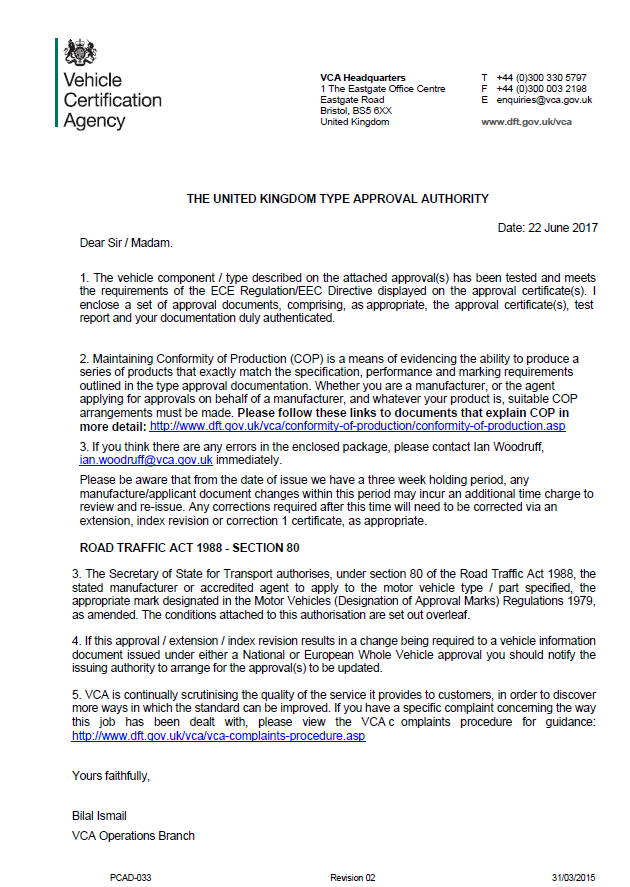
E-MARK E11 certificate example for FPV cameras qualified under ECE R10.
Why Compliance and Specifications Matter in FPV Camera Procurement
FPV camera projects stall when compliance and technical expectations are treated as separate workstreams. Radio emissions, EMC performance, safety, and hazardous-substance rules vary by market. For example, FCC Part 15 applies to equipment sold in the United States; CE EMC directives apply in the European Union; UKCA applies in the United Kingdom; C-TICK is used for Australia and New Zealand; and E-MARK E11 under ECE R10 applies to vehicle-mounted camera applications. In the U.S., FPV video transmitters also require attention because uncertified equipment may require a Technician-level amateur radio license.
Market context confirms that FPV cameras are no longer a niche racing accessory. Fact.MR estimates the global FPV camera market at US$ 825.3 million in 2024, with a projected CAGR of 14.7% through 2034. Global Market Insights values the broader drone camera market at USD 13.6 billion in 2025, driven by industrial and defense applications. The thermal camera market is also expanding, with projections moving from USD 5.16 billion in 2024 to USD 10.09 billion by 2035 at a 6.28% CAGR, according to Market Research Future. These figures explain why tactical, commercial, and industrial buyers are now formalizing camera supplier qualification processes.
FPV Camera Types: Analog, Digital, and Thermal
Three FPV camera technology families cover most procurement needs: analog, digital, and thermal. Each has a different balance of latency, image detail, low-light capability, weight, and cost positioning.
Analog FPV Cameras
Analog FPV cameras remain a practical choice for latency-sensitive, weight-constrained, and budget-conscious programs. IRLAB Limited offers two analog models: CDD-BS59KP and CDD-BS59KU. The CDD-BS59KP provides 1500TVL with a 16:9 image, minimum illumination of 0.00002 LUX, 120° FOV, 0.5W power consumption, and 9g weight. The CDD-BS59KU provides 1500TVL with a 4:3 image, minimum illumination of 0.00001 LUX, a signal-to-noise ratio above 60dB, 0.6W power consumption, and 9g weight. The 0.00001 LUX sensitivity is often described as starlight-grade performance, because it can produce usable video in near-zero-light conditions.
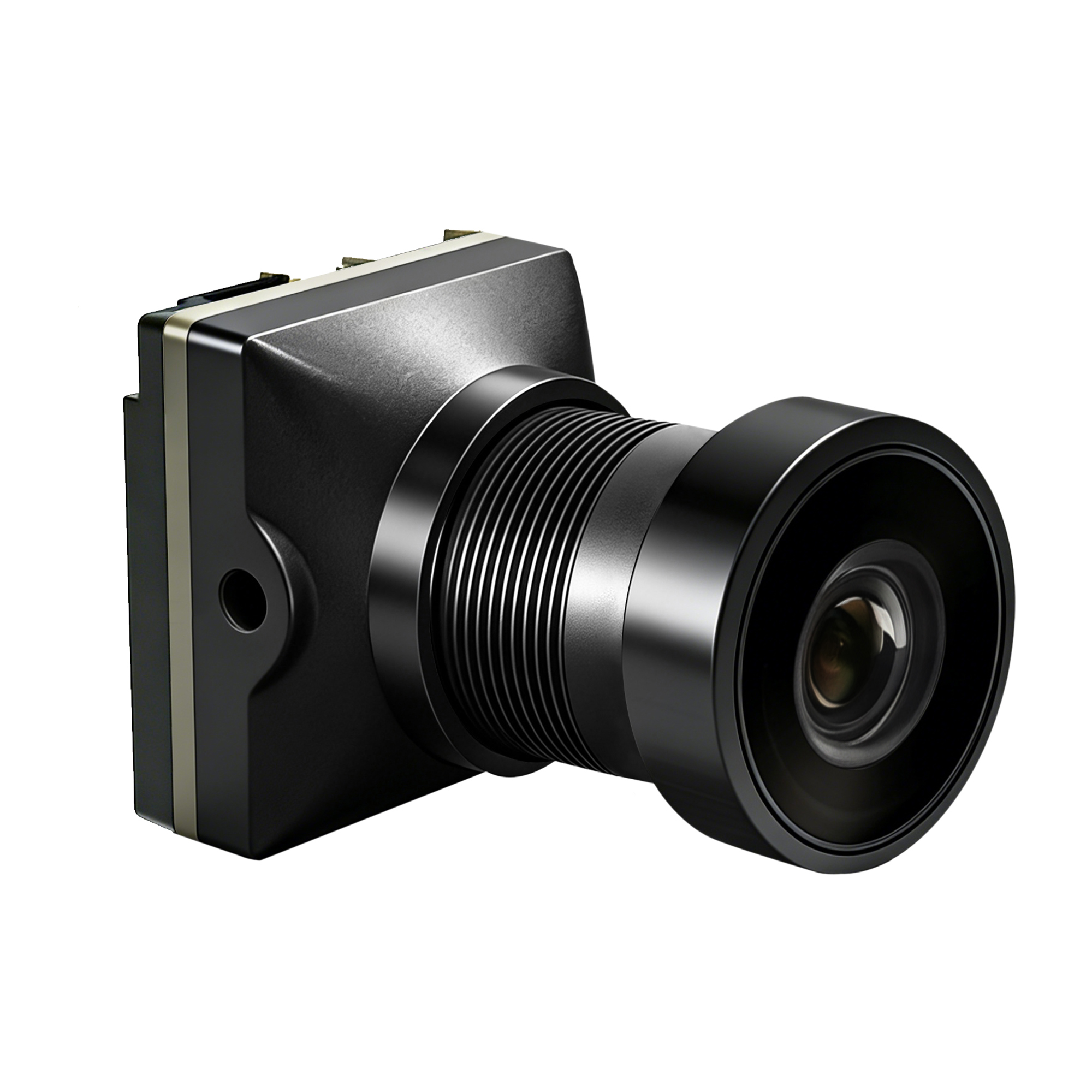
IRLAB analog FPV camera with wide-voltage input and compact 19mm body.
Digital FPV Cameras
The digital FPV camera model CDD-BS5JMU uses a SONY sensor and supports 3840×2160 at 30fps, 1080p at 90fps, and 720p at 120fps. It offers 50ms glass-to-glass latency, a 120° FOV, 9–30V input, 2T2R antenna, and support for MSP and MAVLINK OSD protocols. The camera body is 19×19×26mm, the main board is 32×32×19.3mm with a fan, and total weight is 32g with fan. It also records to a TF card slot supporting up to 1TB. This makes the CDD-BS5JMU suitable for tactical FPV drones that need HD video, telemetry overlay, and onboard recording.
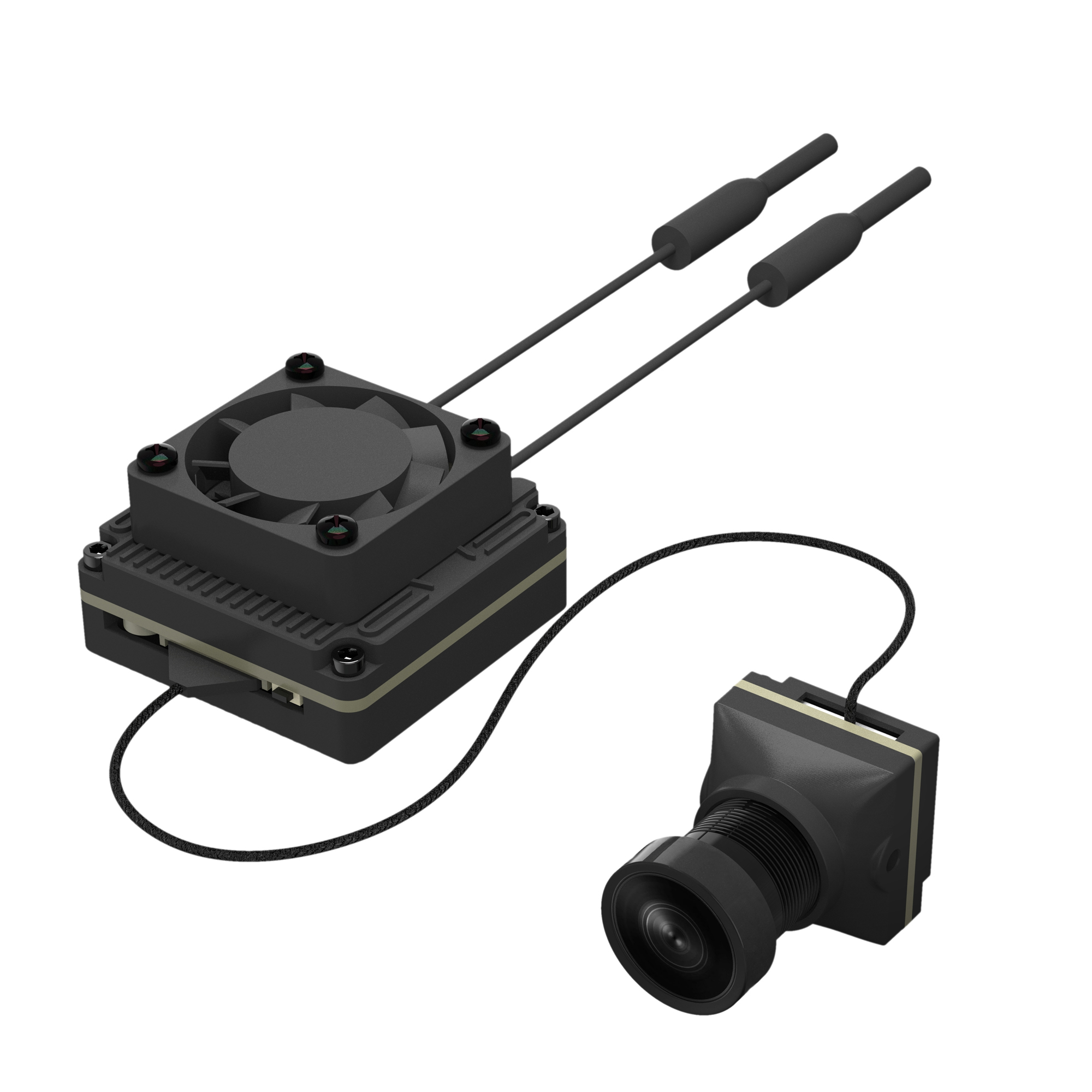
Digital FPV camera CDD-BS5JMU supports 4K recording and 50ms glass-to-glass latency.
Thermal FPV Cameras
Thermal FPV cameras add detection capability that is independent of visible light. IRLAB offers two uncooled vanadium oxide thermal models: CT-EI5ATB with 384×288 resolution and CT-EI5ATC with 640×512 resolution. Both use a 12μm pixel pitch, operate in the 8–14μm LWIR band, and have NETD ≤30mK at 25°C. Video output supports CVBS or MIPI, with MIPI optional plus UVC, and communication is through UART or USB. Power consumption is ≤1.2W, weight is 40g with a 9.1mm lens, operating temperature is -20°C to 60°C, and storage temperature is -45°C to 65°C.
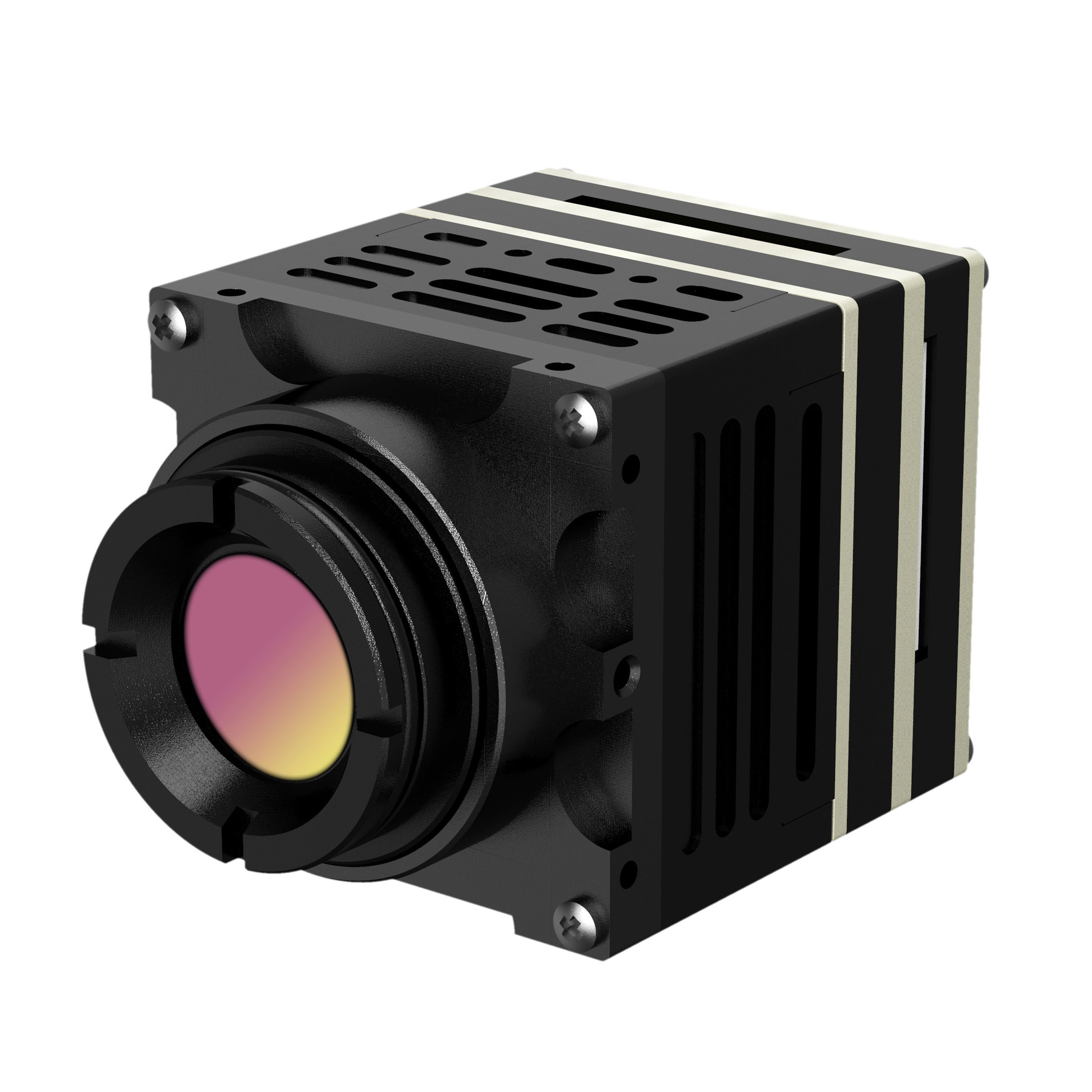
Thermal FPV cameras support tactical reconnaissance, search and rescue, and low-visibility operations.
IRLAB FPV Camera Series: Key Specifications at a Glance
IRLAB Limited is a camera manufacturer founded in 1992 in Taiwan and established in Shenzhen in 2003. The company operates a 3,000m² facility with 100+ employees, including 10+ engineers, and has an annual output capacity of 6 million units. Its FPV camera series is designed for RC models, FPV racing, tactical drones, military drones, surveillance, intelligent robots, and industrial projects.
| Model | Type | Key Specifications | Typical Program Fit |
|---|---|---|---|
| CDD-BS5JMU | Digital FPV / HD FPV camera | SONY sensor; 4K30, 1080p90, 720p120; 50ms latency; 120° FOV; 9–30V; 2T2R; MSP/MAVLINK; 1TB TF card; 32g with fan | Tactical drones, digital FPV racing, recording, OSD integration, AI detection projects |
| CDD-BS59KP | Analog FPV camera | 1500TVL; 16:9; 0.00002 LUX; 120° FOV; CVBS; 3DNR; DC4.5–27V; 0.5W; 9g | Night recon, racing, low-weight platforms, budget-conscious programs |
| CDD-BS59KU | Analog FPV camera | 1500TVL; 4:3; 0.00001 LUX; S/N >60dB; CVBS; 3DNR; DC4.5–27V; 0.6W; 9g | Starlight FPV, tactical low-light missions, no-IR maneuvers |
| CT-EI5ATB | Thermal FPV camera | 384×288; 12μm; 8–14μm; NETD ≤30mK; CVBS/MIPI; UART/USB; ≤1.2W; 40g | Thermal detection, border patrol, fire service, SAR drones |
| CT-EI5ATC | Thermal FPV camera | 640×512; 12μm; 8–14μm; NETD ≤30mK; CVBS/MIPI; UART/USB; ≤1.2W; 40g | High-resolution thermal recon, military tactical drones, heat signature tracking |
Certifications by Target Market
IRLAB’s FPV cameras carry a range of certifications that support export to North America, Europe, the UK, Australia, New Zealand, and other regulated markets. Certification documents should always be reviewed against the final product configuration and destination country requirements.
| Market | Certification | Certification Number | Standard / Scope |
|---|---|---|---|
| USA | FCC | NTC2009742FV00 | FCC CFR 47 Part15 Subpart B Class B:2019 |
| USA / Canada | UL | 20170803-E494081 | UL 60950-1 & CAN/CSA C22.2 No. 60950-1-07 |
| EU | CE | NTC2006705EV00 | EN 55032, EN 61000-3-2, EN 61000-3-3, EN 55035 |
| EU | RoHS | ESTSZ130402233R | RoHS Directive 2011/65/EU Annex II |
| ECE / UK | E-MARK E11 | 10R-048329 | ECE R10 |
| UK | UKCA | SZNTC2204712EV00 | BS EN 55032:2015/A1:2020; BS EN 55035:2017/A11:2020 |
| Australia / New Zealand | C-TICK | RSZA05061052-9 | AS/NZS CISPR 22:2002 Class B |
| Global | ISO 9001:2015 | 44100102298 | Quality management system, issued by TÜV |
How to Evaluate FPV Camera Specifications for Your Program
Specification evaluation should be driven by mission requirements, not by a single headline number. The following decision rules apply to most FPV camera procurement projects.
- Define the operating environment first. For extreme dark night conditions, starlight analog cameras with 0.00001–0.00002 LUX sensitivity or thermal cameras are more relevant than visible-light digital cameras.
- Set an end-to-end latency budget. For high-speed penetration and tactical maneuvering, low latency is critical. The CDD-BS5JMU digital camera specifies 50ms glass-to-glass latency.
- Match resolution to the real task. AI detection, object tracking, and forensic review benefit from digital HD recording. Analog cameras are often sufficient for piloting and target acquisition under low light.
- Check mechanical and electrical integration. Verify mounting dimensions, weight, voltage range, power consumption, output protocol, and communication interface against the drone’s flight controller and video transmitter.
- Confirm compliance before sample approval. Use the product certificate number to verify the camera model and target market.
Step-by-Step FPV Camera Selection and Qualification Process
Procurement teams need a repeatable process, especially when moving from research to evaluation. The following six-step workflow is designed for drone integrators and tactical program managers.
- List target markets. Define where the end product will be sold or deployed. This determines whether FCC, CE, UKCA, E-MARK E11, C-TICK, UL, RoHS, or additional certifications are required.
- Select the camera technology. Choose analog, digital, thermal, or a combination based on mission profile. For night reconnaissance, consider starlight analog or thermal. For HD situational awareness, consider digital.
- Create a specification matrix. Include resolution, latency, minimum illumination, thermal sensitivity, FOV, dimensions, weight, power, voltage, output, and operating temperature.
- Evaluate the manufacturer’s quality system. ISO 9001:2015 certification, in-house engineering, production checks, and outgoing quality control are important signals for repeatable supply.
- Request samples and run field validation. MOQ of 1 unit allows pilot testing before mass production. Small quantities can often be delivered immediately, while larger orders follow a defined production lead time.
- Plan volume and lead time. IRLAB’s monthly capacity is 500,000 units, and large-quantity orders are typically delivered within 15–25 working days after receiving the deposit. Annual output capacity is 6 million units.
Analog vs Digital vs Thermal: Comparison for FPV Camera Buyers
| Factor | Analog FPV | Digital FPV | Thermal FPV |
|---|---|---|---|
| Resolution | 1500TVL | 4K30 / 1080p90 / 720p120 | 384×288 or 640×512 |
| Latency | Mature low-latency analog video path | 50ms glass-to-glass | Low-latency analog / MIPI output options |
| Low-light capability | 0.00001–0.00002 LUX starlight performance | Dependent on sensor and WDR processing | Thermal detection independent of visible light |
| Weight | 9g | 32g with fan | 40g with 9.1mm lens |
| Power | 0.5–0.6W | 5.4W typical, max 9W | ≤1.2W |
| Typical role | Night recon, racing, budget-friendly programs | HD video, recording, OSD, digital transmission systems | Night detection, search and rescue, border patrol, tactical reconnaissance |
OEM, ODM, and Customization Capability
IRLAB offers OEM/ODM services with customization options that include housing color, logo printing, different viewing-angle lenses, video image style, third-party AI algorithm integration, and third-party wireless transmission solution integration. Engineering disciplines are in-house, including software, hardware, mechanical structure, video image tuning, and quality control. This matters for buyers because camera customization can be validated at the source instead of being outsourced to multiple vendors.
For AI detection FPV camera and object tracking FPV camera projects, the ability to integrate third-party AI algorithms is often the deciding factor. The same applies to digital FPV camera projects that need custom OSD behavior or a specific wireless transmission link.
Use Cases: From Starlight Night Recon to Thermal Search
Tactical Night Reconnaissance
Analog FPV cameras with minimum illumination as low as 0.00001 LUX are used in tactical FPV drones operating in extreme dark environments. This application scenario is common in multiple countries including Ukraine, Russia, Turkey, South Korea, Jordan, UAE, Afghanistan, Armenia, and Australia. In these missions, visible light is limited or absent, and the drone must maintain situational awareness without active IR illumination.
High-Speed Penetration and Terminal Guidance
Digital FPV cameras with 50ms glass-to-glass latency and 120° FOV support high-speed penetration and terminal visual guidance. The CDD-BS5JMU also supports MSP and MAVLINK OSD protocols, which allows flight data to be overlaid on the video feed.
Thermal Surveillance and Search
Thermal FPV cameras such as CT-EI5ATB and CT-EI5ATC are applicable to military reconnaissance, border patrol, mining and heavy industry, public security, emergency rescue, fire service, and wildlife conservation. Their LWIR 8–14μm response and NETD ≤30mK enable detection of heat signatures in smoke, fog, and total darkness.
OEM Supply for an FPV Drone Manufacturer
IRLAB worked with an FPV drone manufacturer in Ukraine that used 30,000 units over a one-year period. The cameras operated at sensitivity levels as low as 0.00001 LUX, a condition where conventional vision systems are effectively blind. According to the customer, the camera enabled the drone to accurately identify, lock onto, and track targets under extreme low-light or zero-light conditions, delivering clear video imagery in very dark night environments.
China-Free FPV Camera Sourcing: What Buyers Should Verify
Some U.S. public-safety and government-funded programs are asking whether FPV cameras can be sourced as China-free. In late 2025, the FCC added uncrewed aircraft systems and critical components from specific foreign countries to the Covered List under DA 25-1086 due to national security concerns. Buyers should verify their own program’s origin restrictions and applicable regulations. IRLAB Limited is based in Shenzhen, China, so it cannot be categorized as a China-free FPV camera supplier. However, IRLAB’s camera series remains relevant for many commercial and allied defense OEM programs that evaluate suppliers based on certifications, long-term production capability, and engineering support.
Frequently Asked Questions
1. Which certifications should an FPV camera have for export to the US, EU, UK, Australia, or New Zealand?
For the US, an FPV camera typically needs FCC compliance under FCC CFR 47 Part15 Subpart B Class B, and UL safety certification may apply for certain product classes. The EU requires CE EMC compliance under EN 55032, EN 61000-3-2, EN 61000-3-3, and EN 55035, plus RoHS compliance. The UK requires UKCA under BS EN 55032 and BS EN 55035. Australia and New Zealand accept C-TICK under AS/NZS CISPR 22:2002. Vehicle-mounted camera applications may require E-MARK E11 under ECE R10. IRLAB holds these certifications with listed certificate numbers.
2. Can I customize an FPV camera for a tactical drone program?
IRLAB offers OEM/ODM services with customization options including housing color, logo printing, different viewing-angle lenses, video image style, and integration of third-party AI algorithms or wireless transmission solutions. The engineering team for software, hardware, mechanical structure, video image tuning, and quality control works in-house. MOQ is 1 unit, so pilot programs can begin with samples.
3. What is a budget-friendly FPV camera option that still meets compliance?
Analog FPV cameras such as CDD-BS59KP and CDD-BS59KU are commonly evaluated as budget alternatives for high-volume or disposable programs. They provide 1500TVL resolution, 9g weight, 0.5–0.6W power consumption, wide voltage input, and certification coverage across markets. They are a practical starting point when starlight sensitivity and low weight matter more than recorded HD resolution.
4. Can I get FPV camera samples before mass production?
Yes. MOQ is 1 unit, and small quantities can often be delivered immediately. IRLAB’s quality control includes 100% production check plus AQL-standard outgoing quality control. Samples allow integrators to verify mechanical fit, video characteristics, certification documents, and OEM customization options before volume ordering.
5. How long does a bulk FPV camera order take?
Large-quantity orders are typically delivered within 15–25 working days after receiving the deposit. Monthly capacity is 500,000 units and annual output is 6 million units. For a project-specific timeline, contact IRLAB with your target quantity and configuration, or request a quote from the sales team.
Conclusion
FPV camera selection is a compliance exercise as much as a technical one. A camera with strong specs but missing FCC, CE, UKCA, E-MARK E11, C-TICK, UL, or RoHS coverage can create avoidable program risk. A camera with certifications but the wrong latency, low-light sensitivity, or thermal performance will fail in the field. Start with target-market compliance, match the sensor technology to the mission, and then verify the manufacturer can maintain quality at scale.
IRLAB Limited combines more than 30 years of camera development and manufacturing experience, in-house engineering, ISO 9001:2015 quality control, OEM/ODM flexibility, and FPV camera platforms spanning analog, digital, and thermal technologies. This makes IRLAB a useful reference point for procurement teams evaluating tactical and commercial FPV camera suppliers.

IRLAB’s in-house R&D supports custom FPV camera development.
Download the IRLAB corporate brochure to review company background, manufacturing capability, and product scope: IRLAB Company Profile & Corporate Brochure
Contact: sales@irlab.net | Tel: +86 13682444680 | WhatsApp: +8613502860860
Have Questions or Need More Details?
Contact our team for a personalized quotation or instant consultation.
Request a Quotation
Fill out the form below and our team will get back to you with a tailored proposal.
WhatsApp Direct Chat
Prefer to chat in real-time? Message us on WhatsApp for instant assistance & quick answers.
- Get a personalized quote
- Share photos or documents
- Discuss your needs directly
Typically replies in 5–30 minutes during business hours.