FPV Camera Supplier Capability Audit: Verifying Capacity, Engineering Depth, and Delivery Assurance
A supplier capability audit is the structured verification of a camera manufacturer's factory footprint, workforce, engineering ownership, and delivery commitments against documents and physical evidence, completed before a purchase order is issued. For tactical and industrial programs, the audit answers one question: can this supplier build the same FPV camera, to the same specification, in the same condition, repeatedly — and support it after delivery?
IRLAB Limited is used throughout this guide as a worked example. IRLAB Limited is a camera developer and manufacturer founded in 1992 in Taiwan and established in Shenzhen, China in 2003. The company operates a 3,000 m² manufacturing facility with 100+ employees, including 10+ engineers, and documents an annual output of 6 million units. Its FPV camera range covers analog models (CDD-BS59KU, CDD-BS59KP), digital models (CDD-BS5JMU), and thermal models (CT-EI5ATC, CT-EI5ATB).
The framework below is evidence-first. At every checkpoint it states what to request, what a credible answer looks like, and how that answer maps to delivery assurance on a real order.
Problem Definition: Why Supplier Capability Is Hard to Verify
Most supplier failures are not manufacturing failures. They are verification failures. A camera supplier can pass a sample review and still fail a production program, because the attributes that determine program success are not visible in the sample itself.
Five failure patterns appear repeatedly in tactical and industrial FPV camera sourcing:
- Assembly-only capability. The supplier populates boards and ships housings, but cannot tune the image pipeline, change a lens angle, or adjust the video image style. Customization requests are returned as refusals rather than engineering answers.
- Borrowed capacity. A headline output number covers an entire product portfolio rather than the specific camera line being quoted. The volume you assumed was available is already committed elsewhere.
- Sample-to-production drift. The sample is built by engineers on a bench; the production run is built on a line with different process control.
- Fragmented supply across camera types. Analog, digital, and thermal FPV cameras often come from three different vendors, which means three quality systems, three lead times, and three points of failure inside one program.
- Post-delivery support gaps. Warranty, replacement, and engineering-change support are verbal rather than documented.
A capability audit converts these risks into checkpoints that produce documents instead of assurances.
Industry Background: Why Verification Is Getting More Important
The global FPV camera market was estimated at US$ 825.3 million in 2024, with a projected CAGR of 14.7% through 2034 (Fact.MR). Scope definitions differ widely: a narrower FPV drone component view places the figure near US$ 287 million (Verified Market Reports), while the broader drone camera market, including thermal and RGB systems, was valued at USD 13.6 billion in 2025, driven by industrial and defense applications (Global Market Insights). Within thermal imaging, the market is projected to grow from USD 5.16 billion in 2024 to USD 10.09 billion by 2035 at a CAGR of 6.28% (Market Research Future).
Two structural factors follow. First, demand is diversifying across analog, digital, and thermal, and a single program rarely needs only one camera type. Second, the market is concentrated: DJI holds approximately 74% to 83% of the global drone and imaging market as of 2025–2026 (Dedrone / Statista / DroneDJ), a concentration level that places more weight on documented supplier qualification.
Compliance now behaves like a capability requirement. In the United States, FPV video transmitters typically require compliance with FCC Part 15, and uncertified equipment requires a Technician-level amateur radio (HAM) license. In late 2025, the FCC added uncrewed aircraft systems (UAS) and critical components from specific foreign countries to the Covered List (DA 25-1086). For buyers, origin and eligibility documentation is therefore an audit item alongside the technical file.
What a Verifiable Capability Stack Contains: The IRLAB Limited Example
Capability becomes verifiable when it can be described in units, functions, and documents. The IRLAB Limited example shows what that stack contains across facility, workforce, engineering, and commercial commitment.
Factory footprint: a 3,000 m² manufacturing facility
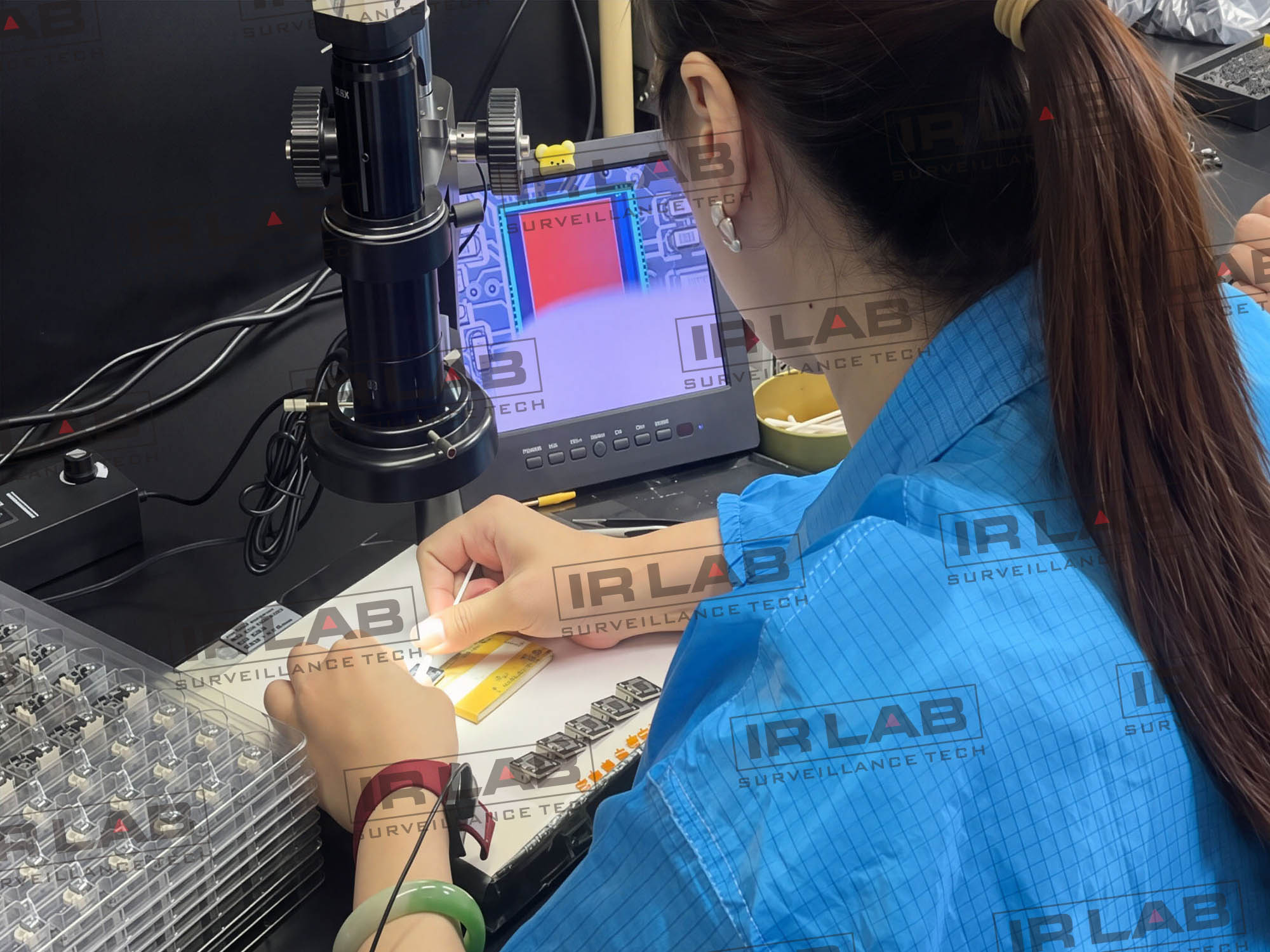
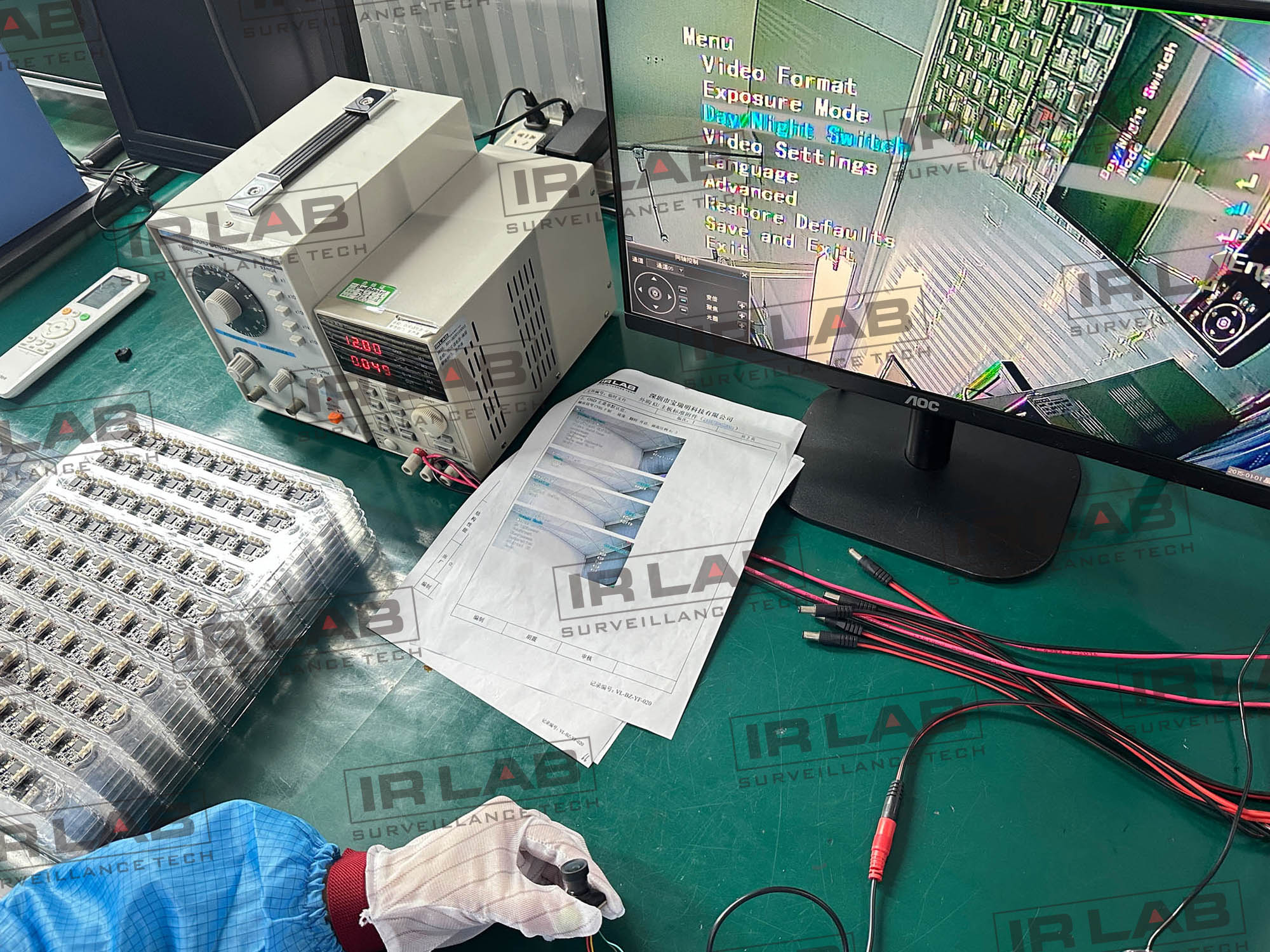
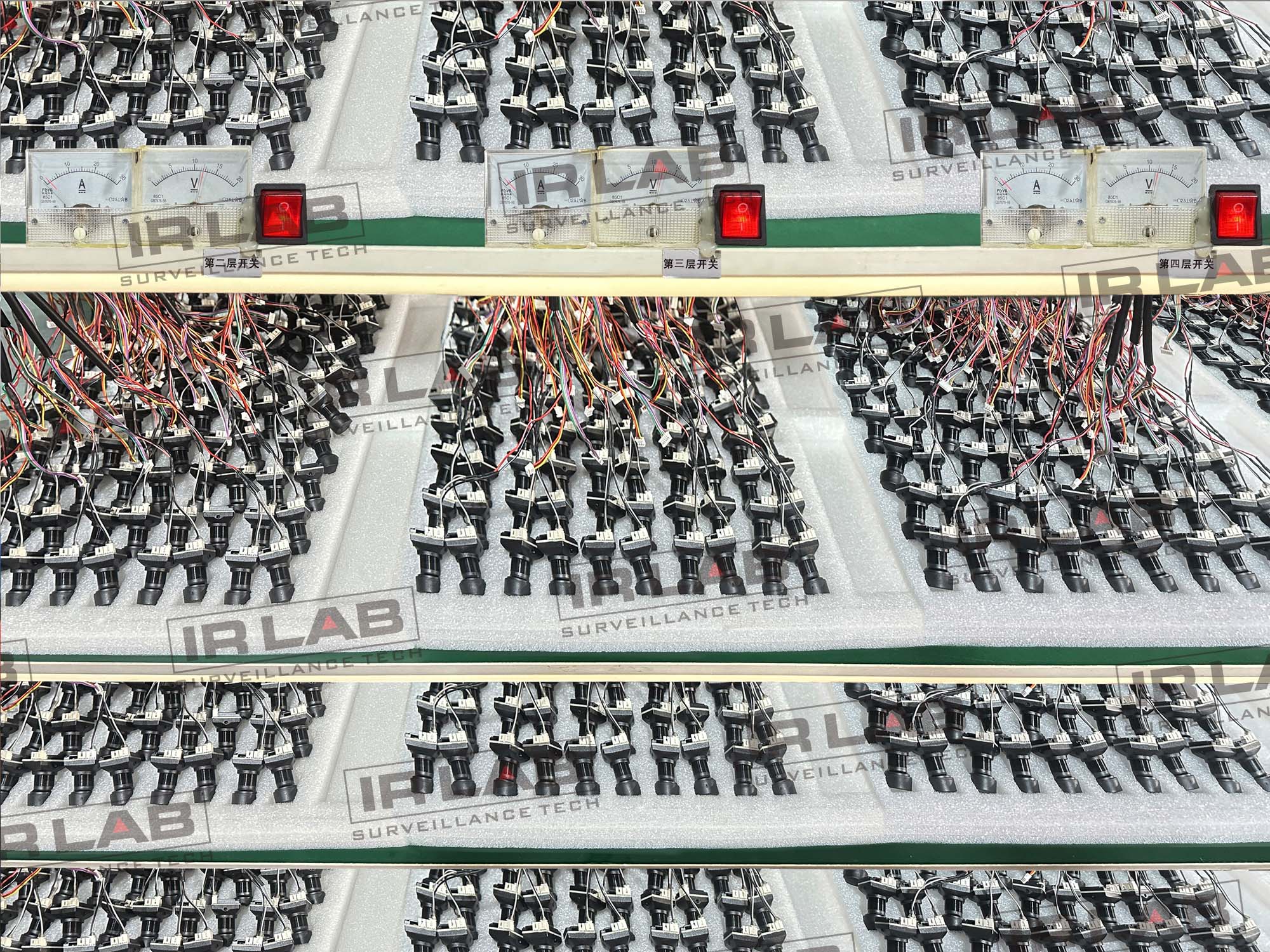
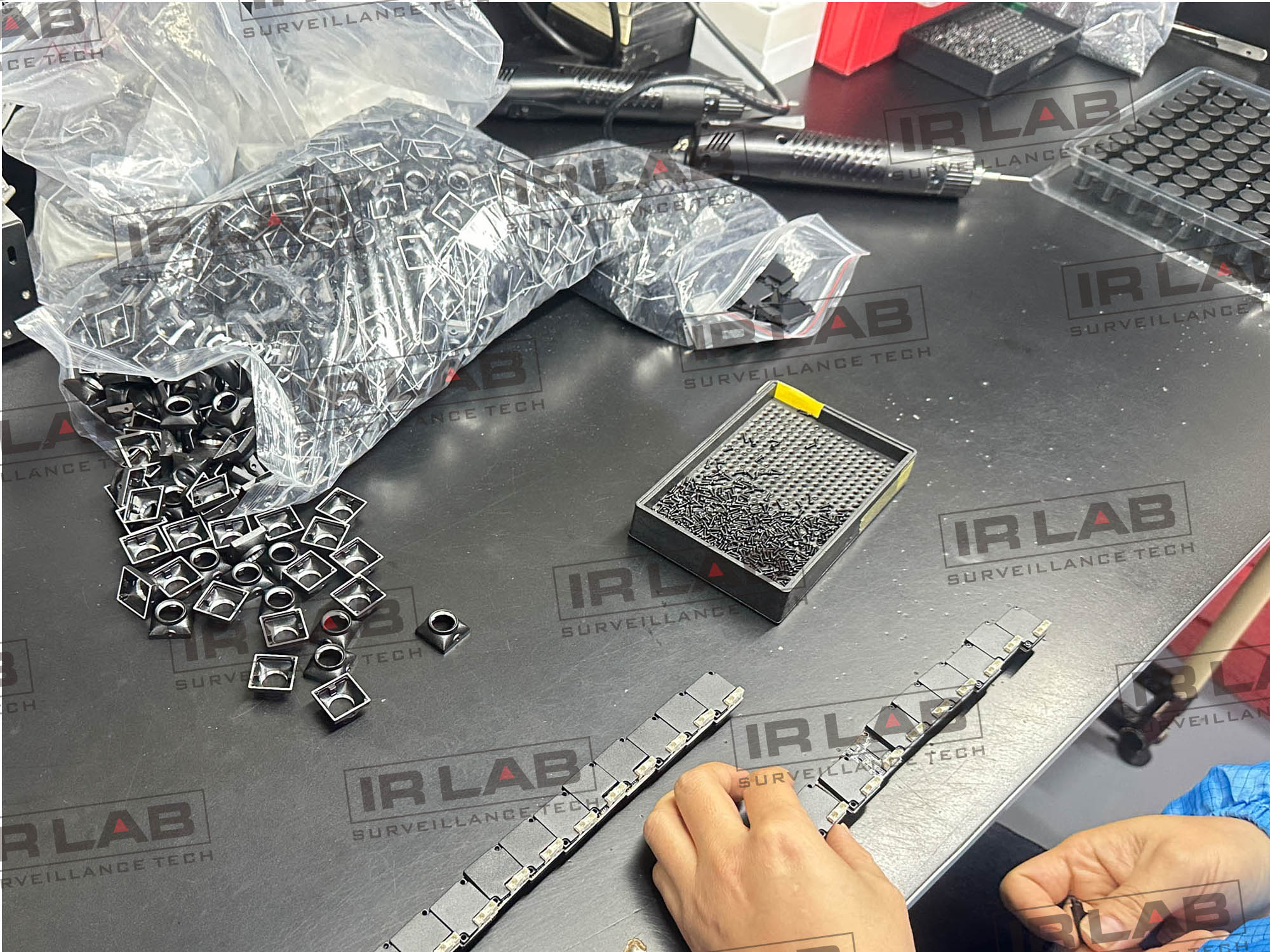
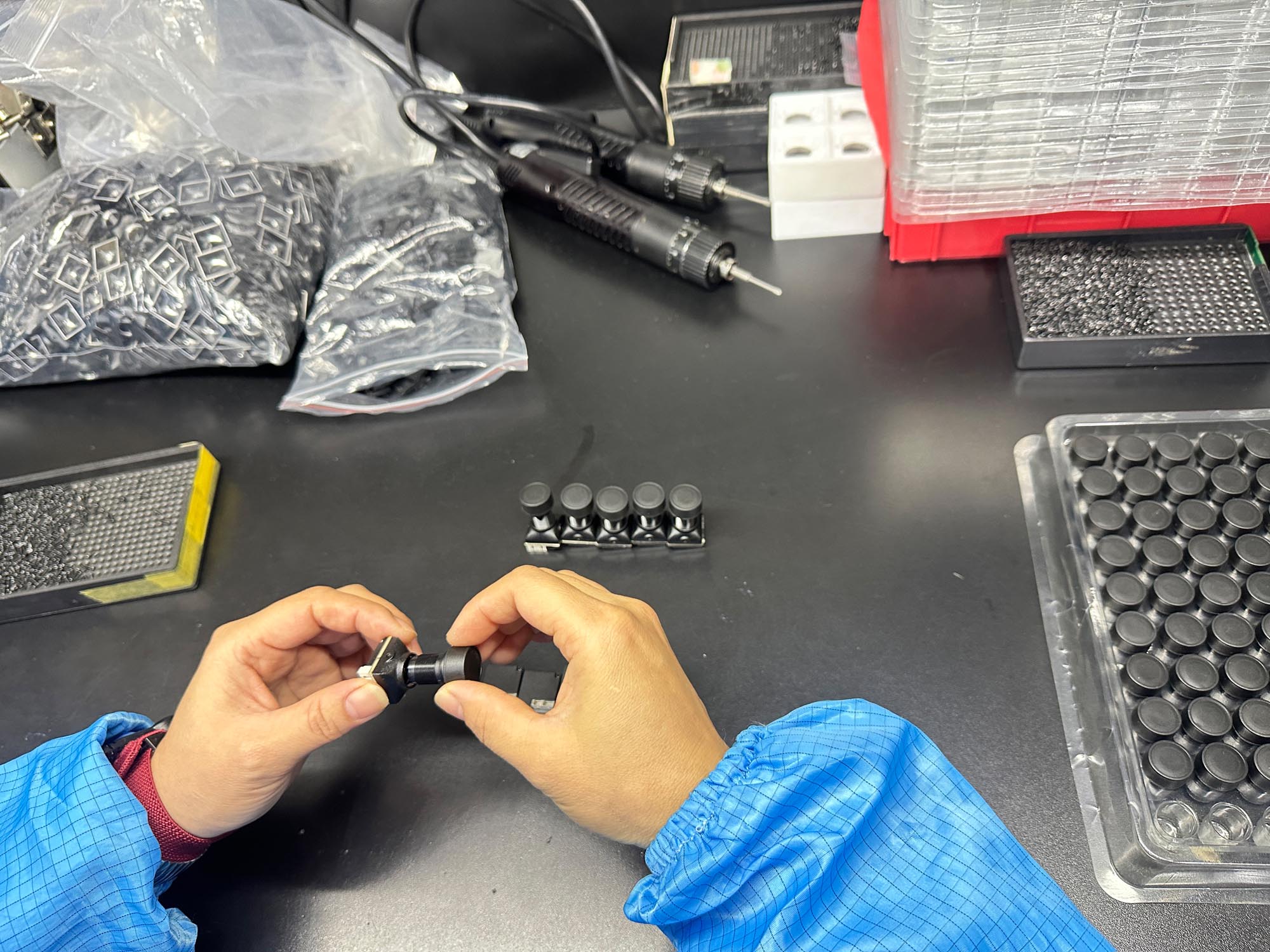
IRLAB Limited operates a 3,000 m² manufacturing facility in Shenzhen with production lines used for camera assembly, in-line testing, and aging. Facility size is only a starting number; the audit question is what happens inside that footprint. Confirm that assembly, test, and aging take place in the same controlled environment, because splitting those stages across subcontractors is where quality variance enters a program.
Workforce and quality system: 100+ employees, 100% production check plus AQL-standard OQC
IRLAB Limited employs 100+ people. Its documented quality control regime is a 100% production check plus AQL-standard OQC (outgoing quality control) inspection, and the company profile states ISO 9001 quality system certification through TüV, with long-term customers that include several Fortune 500 enterprises. In an audit, the workforce number matters less than the control ratio: a 100% production check means every unit is inspected, and an AQL-based OQC means the outgoing batch is sampled against a defined acceptance standard.
Engineering depth: 10+ in-house engineers, not a sales function
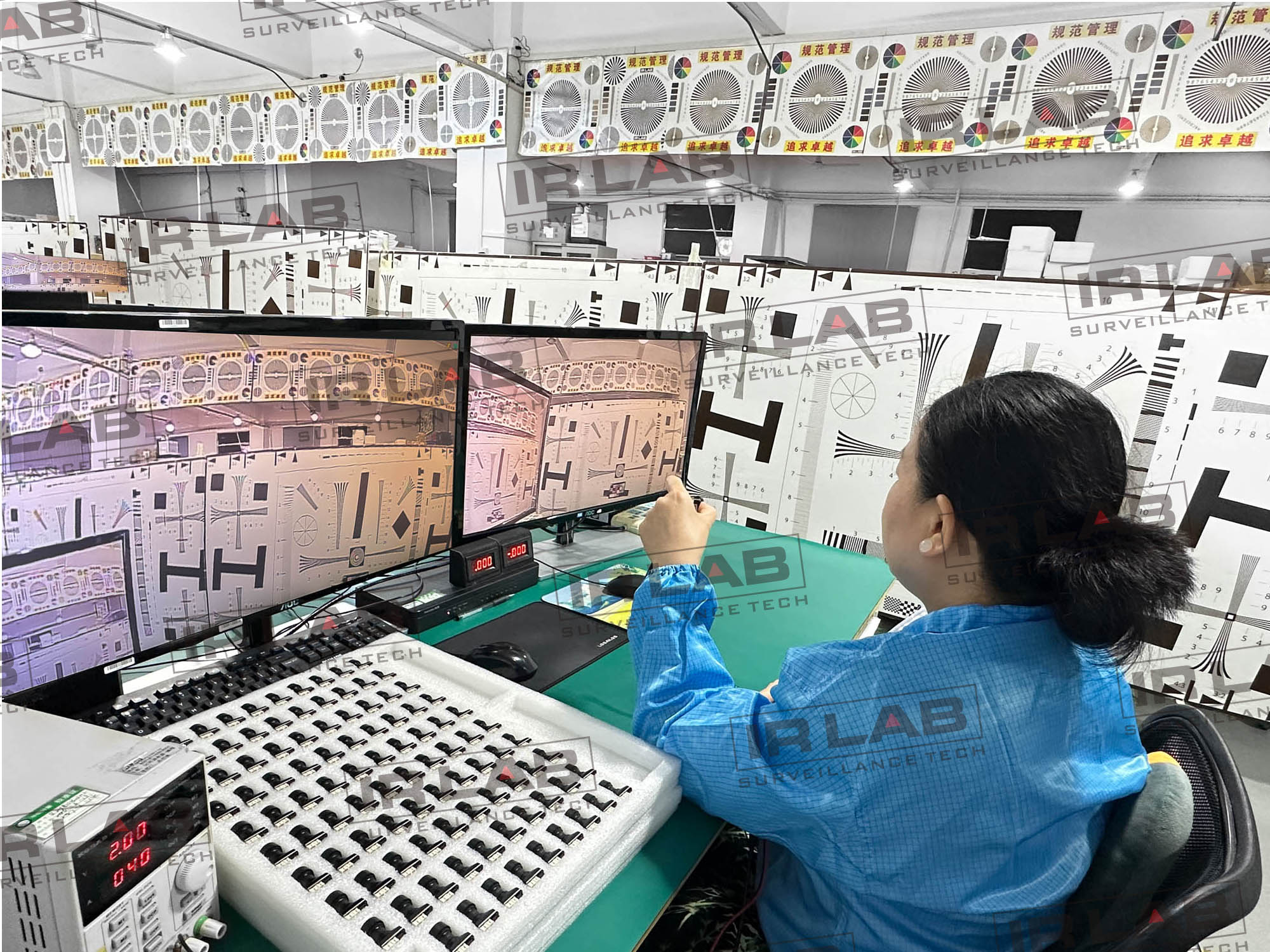
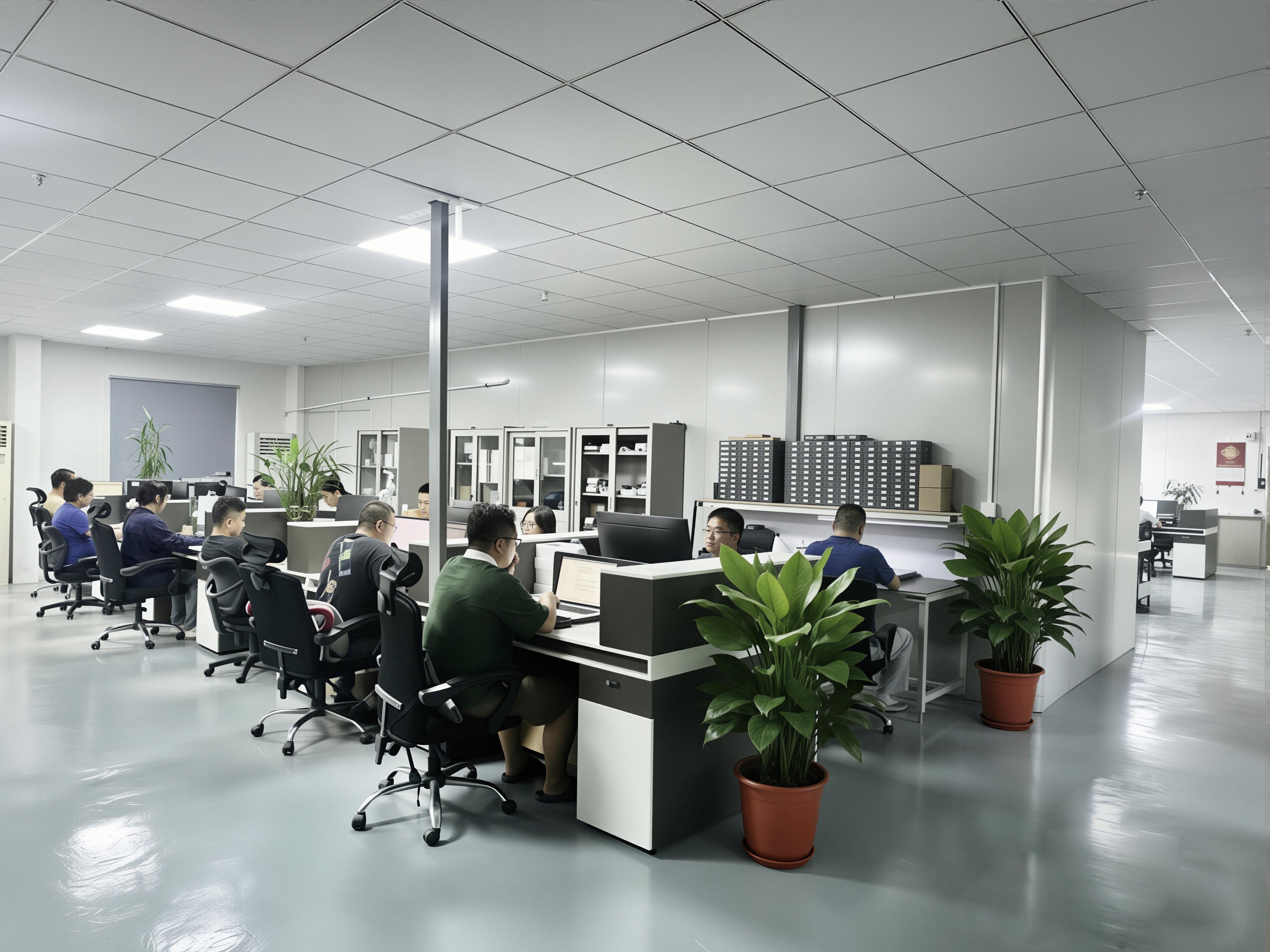
Engineering depth is the checkpoint most often claimed and least often evidenced. IRLAB Limited documents 10+ engineers working in house across software, hardware, mechanical structure, video image tuning, and quality control. Each of those functions maps directly to a buying risk:
- Software — OSD and integration protocols. The digital FPV camera CDD-BS5JMU supports MSP and MAVLINK OSD protocols, the layer that determines whether a camera drops into an existing flight stack or requires custom development.
- Hardware — power and RF behavior. The CDD-BS5JMU operates from 9–30 V with documented transmit power of ≤29 dBm (FCC) and ≤20 dBm (CE) across the 5.1 GHz–5.8 GHz band, using a 2T2R antenna configuration.
- Mechanical structure — SWaP and shock resistance. The analog CDD-BS59KU measures 19 × 19 × 27 mm and weighs 9 g; the thermal CT-EI5ATC measures 25.4 × 25.4 × 38.8 mm including its 9.1 mm lens and weighs 40 g.
- Video image tuning — the function that determines low-light and thermal usability. It is what separates a camera that returns an image in near-zero light from one that returns noise.
- Quality control — the function that keeps sample output and production output aligned.
Customization capacity is documented as housing color, logo printing, different viewing-angle lenses, video image style, third-party AI algorithm integration, and third-party wireless transmission solution integration. For AI detection FPV camera and object tracking FPV camera projects, the AI algorithm integration capability is the practical checkpoint: the camera must accept an external algorithm rather than locking the buyer into a proprietary pipeline.
Capacity and throughput: 500,000 units per month, 6 million units per year
IRLAB Limited documents a monthly capacity of 500,000 units and an annual output of 6 million units, with a 70% export ratio serving Europe, the USA, Japan, Korea, and Taiwan. The audit use of those numbers is arithmetic rather than admiration: compare documented monthly capacity against your peak monthly requirement, then confirm whether the quoted line is shared with other accounts.
Commercial terms: MOQ, lead time, warranty
The delivery-assurance part of an audit is contractual. Documented terms for IRLAB Limited include an MOQ of 1 unit, immediate delivery for small quantities, delivery within 15–25 working days after deposit receipt for large quantities, and a 2-year warranty period. Those four values determine whether a program can run a pilot build quickly and scale without renegotiating.
Step-by-Step Breakdown: The Six-Step FPV Camera Capability Audit
The sequence below is designed to run in a single virtual or on-site session, with a written evidence request issued beforehand.
Step 1 — Fix the camera line and the acceptance-critical specifications
Start by naming the line: analog, digital, or thermal. The acceptance-critical specifications differ by line.
- Analog: resolution in TVL, minimum illumination, S/N ratio, video output, power input range.
- Digital: image sensor, resolution and frame rates, latency (glass to glass), frequency band, transmit power, OSD protocol support.
- Thermal: detector type and resolution, pixel pitch, spectral range, NETD, lens focal length and FOV, video output, operating temperature.
The deliverable from Step 1 is a specification sheet you can compare line by line against the supplier datasheet. For the analog CDD-BS59KU, the documented values are 1500TVL, 4:3 image format, 0.00001 lux minimum illumination, 120° FOV, S/N ratio >60 dB, CVBS output, 3DNR, DC 4.5–27 V input, 0.6 W power consumption, and 9 g weight. Step 1 is complete when every one of those values traces to a document.
Step 2 — Verify the physical footprint
Request a live or recorded walkthrough of the assembly, test, and aging areas. Ask which stages are performed in house, where board-level work happens, and where aging or burn-in occurs. A 3,000 m² footprint with in-line test and aging stations is consistent with a manufacturer that controls its own output rather than outsourcing critical stages.
Step 3 — Verify process control and inspection ratios
Request the inspection plan and a sample OQC report. A credible answer is a 100% production check plus AQL-standard OQC inspection, backed by an ISO 9001 quality system certified by TüV. A weak answer is a blanket statement such as 'we test every unit' with no acceptance standard, or an OQC report without a sampling plan.
Step 4 — Verify engineering ownership
Map the supplier's engineering functions against the five that matter: software, hardware, mechanical structure, video image tuning, and quality control. Request function-level ownership and a description of the last customization actually delivered. IRLAB Limited documents 10+ engineers covering all five functions in house, which is the structure a buyer needs when a program requires lens changes, image style adjustments, or third-party AI and wireless integration.
Step 5 — Verify capacity against your program, not the portfolio
Take the documented monthly capacity, 500,000 units for IRLAB Limited, and ask which lines and accounts consume it and how a new program is scheduled against existing commitments. Confirm the export split as well, since 70% export coverage across Europe, the USA, Japan, Korea, and Taiwan implies established documentation and logistics routines for international programs.
Step 6 — Verify delivery and after-sales in writing
Confirm MOQ (1 unit), small-quantity lead time (immediate delivery), large-quantity lead time (within 15–25 working days after deposit receipt), and warranty (2 years) inside the quotation rather than in conversation. Delivery assurance is a document trail: purchase order, inspection report, aging record, and warranty terms.
Use Cases: Matching Verified Capability to a Real Program
Tactical FPV UAV programs with low-light reconnaissance requirements
In one documented program, an FPV drone manufacturer in Ukraine purchased 30,000 units over one year for integration into its FPV drone platform. The camera operated at sensitivity levels as low as 0.00001 lux, a regime where conventional vision systems are effectively blind, enabling the drone to identify, lock onto, and track targets under extreme low-light or zero-light conditions. The same operating envelope requires latency below 50 ms, shock resistance, SWaP optimization, high EMC immunity, and real-time day/night video streaming, typically alongside a tactical flight controller, encrypted VTX, OSD overlay system, and ground control terminal.
Thermal reconnaissance, SAR, and industrial survey
The CT-EI5ATC is a 640 × 512 thermal FPV camera built on an uncooled vanadium oxide detector with 12 µm pixel pitch, an 8–14 µm spectral range, and NETD ≤30 mK at 25°C. Its 9.1 mm lens delivers a 46° × 37° field of view. Power consumption is ≤1.2 W at DC 3.9–5.5 V, video output options are CVBS and MIPI (with a MIPI + UVC option), and communication is over UART or USB. Operating temperature spans −20°C to 60°C with storage from −45°C to 65°C. The CT-EI5ATB is the 384 × 288 variant with the same optical and electrical envelope.
FPV racing and RC platforms
For racing and RC applications, the verification focus shifts to latency and frame rate. The CDD-BS59KP analog camera provides 1500TVL at 16:9 with 0.00002 lux minimum illumination, S/N ratio >54 dB, and 0.5 W power consumption. The digital CDD-BS5JMU adds 3840 × 2160@30fps, 1080p@90fps, and 720p@120fps modes, 50 ms glass-to-glass latency, a TF card slot supporting up to 1 TB recording, and a total weight of 32 g including the fan (9 g camera plus 23 g main board).
Comparison Table: Line-Level Verification Parameters
| Verification parameter | Analog CDD-BS59KU | Digital CDD-BS5JMU | Thermal CT-EI5ATC |
|---|---|---|---|
| Primary role | Ultra-low-light, low-latency FPV | HD FPV with AI detection and tracking integration | Thermal reconnaissance and survey |
| Resolution | 1500TVL, 4:3 | 3840×2160@30fps, 1080p@90fps, 720p@120fps | 640 × 512 |
| Low-light / thermal sensitivity | 0.00001 lux min. illumination; S/N >60 dB | SONY image sensor | Uncooled vanadium oxide; NETD ≤30 mK @25°C |
| Latency | Analog CVBS path; low-latency design | 50 ms (glass to glass) | Not stated in published parameters |
| Field of view | 120° | 120° | 46° × 37° (9.1 mm lens) |
| Power | DC 4.5–27 V; 0.6 W | 9–30 V; 5.4 W normal, 9 W max | DC 3.9–5.5 V; ≤1.2 W |
| Size / weight | 19 × 19 × 27 mm / 9 g | Camera 19 × 19 × 26 mm; main board 32 × 32 × 19.3 mm with fan; 32 g total | 25.4 × 25.4 × 38.8 mm with 9.1 mm lens / 40 g |
| Interface / protocol | CVBS, 3DNR | MSP and MAVLINK OSD; 5.1–5.8 GHz; 2T2R | CVBS / MIPI; UART / USB |
| Housing / lens material | Aluminum alloy housing; glass + plastic lens | Aluminum alloy housing; glass + plastic lens | Aluminum alloy housing; glass + plastic lens |
Documented manufacturer-level capacity covering these lines: 500,000 units per month and 6 million units per year, with a 70% export ratio across Europe, the USA, Japan, Korea, and Taiwan.
| Audit checkpoint | Evidence to request | IRLAB Limited documented value |
|---|---|---|
| Physical footprint | Facility walkthrough, line and aging-area records | 3,000 m² manufacturing facility |
| Workforce and inspection | Inspection plan, OQC sample report | 100+ employees; 100% production check + AQL-standard OQC inspection |
| Quality system | Certification copy | ISO 9001 quality control system certified by TüV |
| Engineering ownership | Engineering function list, delivered customization record | 10+ engineers across software, hardware, mechanical structure, video image tuning, and quality control |
| Capacity | Capacity statement, scheduling plan | 500,000 units/month; 6 million units/year; 70% export ratio |
| Delivery terms | Quotation terms | MOQ 1 unit; small quantity immediate; large quantity 15–25 working days after deposit |
| After-sales | Warranty statement | 2-year warranty period |
| Origin and eligibility | Manufacturing location and origin documentation | Verify against the applicable restriction list for the destination market (for example FCC Covered List DA 25-1086) |
FAQ: FPV Camera Supplier Verification Questions
What documentation should be verified before placing an order for a tactical FPV camera?
Verify four document sets before ordering. First, the quality system: IRLAB Limited states ISO 9001 quality system certification through TüV. Second, inspection evidence: a documented regime of 100% production check plus AQL-standard OQC inspection. Third, RF and regulatory parameters for the specific model, because FPV video transmitters in the United States typically require FCC Part 15 compliance, and uncertified equipment requires a Technician-level amateur radio (HAM) license. Fourth, origin and eligibility documentation where the program falls under restrictions such as the FCC Covered List additions announced in late 2025 (DA 25-1086). Published model parameters help here: the digital CDD-BS5JMU lists transmit power of ≤29 dBm (FCC) and ≤20 dBm (CE).
How can a buyer confirm that an FPV camera supplier has real engineering depth rather than assembly capability?
Ask the supplier to separate its engineering functions and state who owns each one. IRLAB Limited documents 10+ in-house engineers covering software, hardware, mechanical structure, video image tuning, and quality control. Then test the claim with a customization request that requires an engineering answer rather than a sales answer, such as changing the viewing-angle lens, adjusting the video image style, or integrating a third-party AI algorithm or wireless transmission solution. A supplier with in-house engineering responds with a technical path and a schedule; an assembly-only supplier responds with a refusal or an outsourcing timeline it does not control.
How should budget be assessed when comparing FPV camera suppliers?
Budget comparison should be anchored on documented commercial terms rather than a headline unit price, because configuration drives cost. The verifiable terms at IRLAB Limited are an MOQ of 1 unit, immediate delivery for small quantities, delivery within 15–25 working days after deposit receipt for large quantities, and a 2-year warranty period. Those terms change total program cost: a low MOQ lowers pilot risk, a defined lead time lowers schedule risk, and a 2-year warranty lowers lifecycle cost. Buyers evaluating a budget alternative to a premium ecosystem should compare MOQ, lead time, warranty, and customization scope across every candidate.
What should sample-stage validation cover before committing to full production?
The sample stage should validate the camera under the program's real conditions rather than on a bench. In one documented program, an FPV drone manufacturer in Ukraine ordered 30,000 units over one year, and the validated behavior was operation at sensitivity as low as 0.00001 lux, including target identification, lock-on, and tracking under extreme low-light or zero-light conditions. A practical sample plan tests low-light performance, latency, shock and vibration survival, EMC behavior in the intended RF environment, and protocol integration (for the CDD-BS5JMU, MSP and MAVLINK). The documented MOQ of 1 unit makes this stage commercially accessible.
What are the documented delivery terms, and how does a program scale from sample to full-rate production?
IRLAB Limited documents immediate delivery for small quantities and delivery within 15–25 working days after deposit receipt for large quantities, against a monthly capacity of 500,000 units and an annual output of 6 million units, with a 2-year warranty period. The scaling path is therefore: sample order, validation against the program's operating conditions, then a production schedule aligned to documented capacity. Buyers ready to start that path can request a sample or a quotation through sales@irlab.net or WhatsApp +8613502860860, or review the IRLAB Limited company profile and product lines on the official website.
Conclusion: Audit the Evidence, Then Place the Order
An FPV camera supplier capability audit is not a relationship exercise. It is a documentation exercise. The checkpoints that matter are the ones that can be evidenced: a physical manufacturing footprint, a defined inspection ratio, in-house engineering ownership across software, hardware, mechanical structure, and video image tuning, capacity that reconciles with your demand, and delivery terms stated in the quotation.
IRLAB Limited provides a concrete reference for what that evidence looks like: a 3,000 m² facility, 100+ employees, 10+ in-house engineers, 500,000 units of monthly capacity with 6 million units of annual output, an MOQ of 1 unit, 15–25 working day lead times for large orders, and a 2-year warranty, spanning analog (CDD-BS59KU, CDD-BS59KP), digital (CDD-BS5JMU), and thermal (CT-EI5ATC, CT-EI5ATB) FPV camera lines. Whether or not a program selects this supplier, the same checkpoints should be applied to every candidate before a tactical or industrial FPV camera order is placed.
Start With a Sample, Verify With Documents
IRLAB Limited supplies analog, digital, and thermal FPV cameras for tactical, industrial, and RC programs, with OEM/ODM customization and in-house engineering support.
- Official website: www.irlab.net
- Company blog: blog.irlab.net
- Sample or quotation: sales@irlab.net | Tel: +86 13682444680 | WhatsApp: +86 13502860860
- Company profile and corporate brochure (PDF): download the IRLAB Limited brochure
- Address: 5th–6th Fls. 2A Building, Huihao Industrial Park, Hewan Community, Matian Sub-district, Guangming District, Shenzhen, China
Have Questions or Need More Details?
Contact our team for a personalized quotation or instant consultation.
Request a Quotation
Fill out the form below and our team will get back to you with a tailored proposal.
WhatsApp Direct Chat
Prefer to chat in real-time? Message us on WhatsApp for instant assistance & quick answers.
- Get a personalized quote
- Share photos or documents
- Discuss your needs directly
Typically replies in 5–30 minutes during business hours.