
FPV Camera Project Fit: Analog, Digital, or Thermal for Your Drone Mission
Selecting an FPV camera for a drone program is less about picking the highest resolution and more about matching the camera to the mission environment. For tactical and commercial projects, the practical choice usually comes down to three camera families: analog, digital, and thermal.
Analog FPV cameras remain relevant because of ultra-low latency and extreme low-light sensitivity. Digital FPV cameras add HD detail, recording, and modern OSD integration. Thermal FPV cameras bring detection capability in total darkness, smoke, fog, and camouflage conditions.
This article explains how to make that choice, using IRLAB Limited's product line as a working example. IRLAB is a camera manufacturer founded in 1992 in Taiwan and established in Shenzhen in 2003, with more than 30 years of camera engineering and OEM/ODM experience.
Why Mission Fit Matters More Than Resolution
Many drone project teams choose an FPV camera by comparing resolution numbers or price alone. That approach often fails in the field. A camera that works well during a daytime test may produce unusable video at night, under vibration, in cold weather, or inside an electromagnetic interference (EMI) environment.
The real problem is a mismatch between the project's operating profile and the camera's performance envelope. Mission-critical FPV projects need to define the environment first: lighting conditions, temperature range, shock and vibration levels, smoke or fog presence, latency budget, SWaP (size, weight, and power), and video link type. Only then can a camera class be selected.
FPV Camera Market and Technology Background
The global FPV camera market was estimated at US$825.3 million in 2024, with a projected CAGR of 14.7% through 2034, according to Fact.MR. The wider drone camera market, including thermal and RGB systems, was valued at USD 13.6 billion in 2025, driven by industrial and defense applications, according to Global Market Insights. Thermal imaging is also expanding: the thermal camera market is projected to grow from USD 5.16 billion in 2024 to USD 10.09 billion by 2035, per Market Research Future.
This growth is not only about consumer racing. Tactical FPV drones, inspection robots, search-and-rescue platforms, and defense programs are demanding cameras that can handle extreme dark night, sunshine day, high vibration or shock, wide temperature spans, EMI, dense fog, and torrential rain.
Regulation is also part of the picture. In the U.S., FPV video transmitters generally require compliance with FCC Part 15 rules; uncertified equipment requires a Technician-level amateur radio license. In late 2025, the FCC added uncrewed aircraft systems and critical components from certain foreign countries to its Covered List, which has pushed procurement teams to examine component sourcing more carefully. Against this background, manufacturers with documented compliance, transparent supply chains, and in-house quality control have a natural advantage.
IRLAB FPV Camera Family: A Detailed Look
IRLAB Limited offers a focused FPV camera family that maps directly to mission profiles: analog, digital, and thermal models. All models use an aluminum alloy housing with a glass-plus-plastic lens, and all are supported by IRLAB's in-house R&D, including software, hardware, mechanical structure, video image tuning, and quality control.
Analog FPV Cameras: Low Latency and Extreme Low-Light
.jpg)
The analog line includes the 16:9 CDD-BS59KP and the 4:3 CDD-BS59KU. Both deliver 1500TVL resolution with a 120° field of view and CVBS video output. The CDD-BS59KP has a minimum illuminance of 0.00002 lux and runs on 0.5W; the CDD-BS59KU reaches 0.00001 lux with 0.6W power consumption. Each weighs only 9g and measures 19mm by 19mm by 27mm. Wide input voltage from DC 4.5V to 27V, 3DNR noise reduction, and signal-to-noise ratios above 54dB (KP) or 60dB (KU) make these cameras suitable for lightweight FPV platforms, including disposable tactical drones.
.jpg)
Digital FPV Camera: HD Detail with Recording
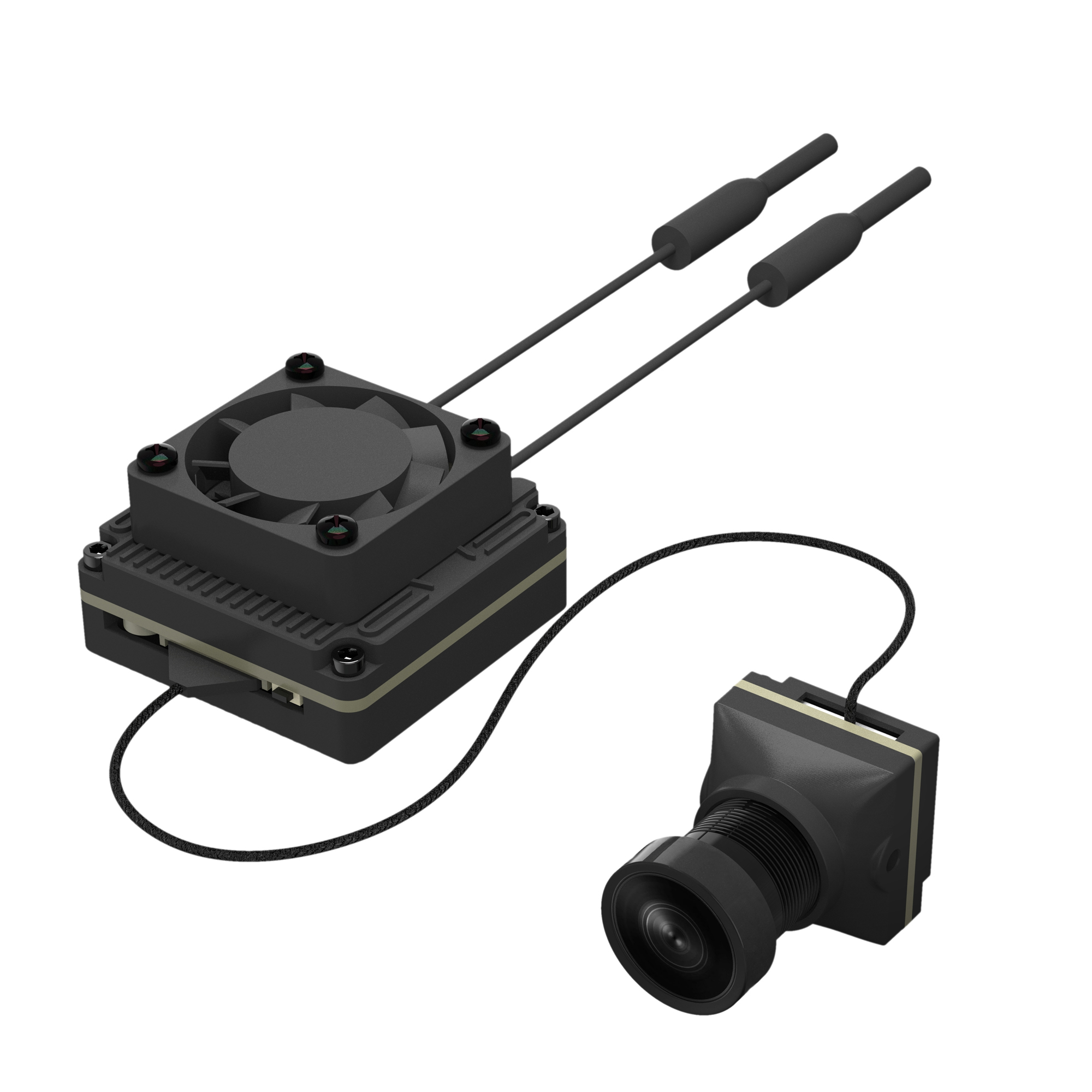
For projects that need HD detail and onboard recording, the CDD-BS5JMU digital FPV camera uses a SONY image sensor and supports 3840x2160 at 30fps, 1080p at 90fps, and 720p at 120fps. Glass-to-glass latency is 50ms, field of view is 120°, and the operating frequency band is 5.1GHz to 5.8GHz. It supports MSP and MAVLINK OSD protocols, a 2T2R antenna, and a TF card slot for recording up to 1TB. The main board measures 32mm by 32mm by 19.3mm with fan, the camera measures 19mm by 19mm by 26mm, and total weight is 32g. With 9V to 30V input, it suits systems that can support a normal power draw of 5.4W and a maximum of 9W.
Thermal FPV Cameras: Detection in Darkness, Smoke, and Fog
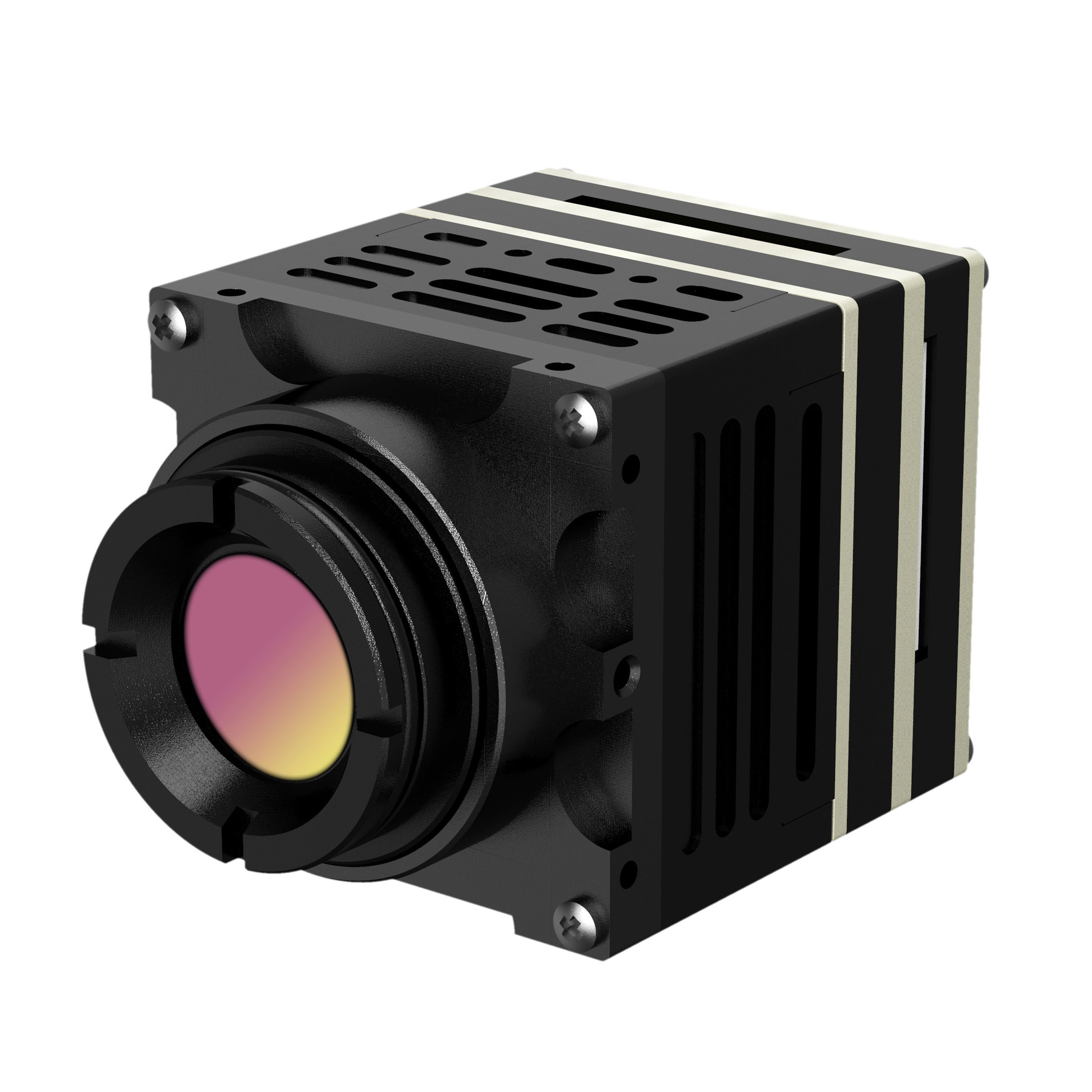
The thermal line includes the CT-EI5ATB with a 384 by 288 detector and the CT-EI5ATC with a 640 by 512 detector. Both use an uncooled vanadium oxide sensor, 12μm pixel pitch, 8-14μm LWIR spectral range, NETD no greater than 30mK at 25°C, and a 9.1mm lens with a 46° by 37° field of view. They provide CVBS or MIPI video output, UART or USB communication, and typical DC 5V operation with power consumption no greater than 1.2W. Each weighs 40g and measures 25.4mm by 25.4mm by 38.8mm including the lens. Operating temperature is -20°C to 60°C, and storage temperature is -45°C to 65°C.
OEM and ODM Customization

IRLAB supports OEM and ODM customization including housing color, logo printing, different viewing angle lenses, video image style, third-party AI algorithm integration, and third-party wireless transmission solution integration. The factory has a monthly capacity of 500,000 units, with a 2-year warranty and quality control that includes 100% production checks plus AQL-standard OQC checks.
Step-by-Step: How to Select an FPV Camera for Your Project
Step 1: Define the Operating Environment
Start with the worst-case environment. Tactical FPV scenarios may include extreme dark night, sunshine day, high vibration or shock, wide temperature range of -38°C to 60°C, EMI, dense fog, or torrential rain. List every condition the camera must survive.
Step 2: Set Latency and Video Link Requirements
If the mission requires ultra-low latency below 50ms, analog CVBS cameras are a proven baseline, and the CDD-BS5JMU digital model also reaches 50ms glass-to-glass. Thermal models with CVBS output can also feed an analog FPV system for low-latency operation.
Step 3: Check SWaP Constraints
Weight and power are critical. The analog cameras weigh 9g and consume 0.5W or 0.6W. The digital CDD-BS5JMU weighs 32g and draws 5.4W typical. The thermal cameras weigh 40g and consume no more than 1.2W. Compare these numbers against your drone's lift capacity and power budget.
Step 4: Map Mission Functions to Camera Capability
For target identification, locking, and tracking in extreme low light, the analog CDD-BS59KU with 0.00001 lux sensitivity is relevant. For detection in total darkness, smoke, or camouflage, a thermal LWIR camera is the appropriate class. For reconnaissance and evidence recording, the digital camera with a TF card slot and up to 1TB recording capacity is a strong fit.
Step 5: Verify Integration and Protocol Compatibility
Analog cameras use CVBS video output. Digital models use MSP and MAVLINK OSD protocols and operate in the 5.1GHz to 5.8GHz band. Thermal cameras use UART or USB communication and CVBS or MIPI output. Confirm that your flight controller, video transmitter, OSD overlay system, ground control station, and receiver support the chosen interface.
Step 6: Evaluate Compliance, OEM Support, and Supply Chain
Check FCC Part 15 and CE transmit power limits. For example, the digital CDD-BS5JMU specifies transmit power of no more than 29dBm for FCC and 20dBm for CE in the 5.8GHz band. Confirm import restrictions, minimum order quantity, lead time, and warranty. IRLAB's MOQ is 1 unit; small-quantity orders can be delivered immediately, and large orders generally ship within 15 to 25 working days after deposit.
Use Cases: How These Cameras Are Applied
Tactical low-light program. One FPV drone manufacturer in Ukraine used IRLAB cameras in a 30K-unit annual program. Operating at sensitivity levels as low as 0.00001 lux, a regime where conventional vision systems are effectively blind, the camera allowed the drone to accurately identify, lock onto, and track targets under extreme low-light or zero-light conditions.
Tactical reconnaissance with thermal. For a tactical reconnaissance project, the CT-EI5ATC thermal camera provides 640 by 512 resolution and NETD no greater than 30mK, making it suitable for detecting heat signatures in darkness, smoke, or fog. The camera also supports CVBS output, which can feed analog FPV goggles for real-time missions.
Commercial inspection and search. For commercial drone inspection teams, the CDD-BS5JMU digital camera records high-definition video to a TF card while delivering 1080p at 90fps for smoother FPV streaming. Its 120° field of view and 50ms latency make it usable for close-range structure inspection and search operations.
IRLAB FPV Camera Models: Comparison Table
| Model | Technology | Key Specifications | Typical Mission Fit | Integration Notes |
|---|---|---|---|---|
| CDD-BS59KP | Analog (16:9) | 1500TVL, 0.00002 lux, 0.5W, 9g, CVBS | Night and low-light FPV on lightweight platforms | Use with analog video transmitter and OSD overlay |
| CDD-BS59KU | Analog (4:3) | 1500TVL, 0.00001 lux, 0.6W, 9g, CVBS | Extreme low-light target identification and tracking | Use with analog video transmitter and OSD overlay |
| CDD-BS5JMU | Digital | 4K at 30fps, 1080p at 90fps, 50ms latency, 32g, TF card up to 1TB | HD reconnaissance, recording, and long-range missions | Requires compatible digital VTX; supports MSP and MAVLINK |
| CT-EI5ATB | Thermal LWIR | 384x288, NETD 30mK, 12μm, 40g, 1.2W | Thermal detection in darkness, smoke, or fog | Supports CVBS or MIPI; UART or USB control |
| CT-EI5ATC | Thermal LWIR | 640x512, NETD 30mK, 12μm, 40g, 1.2W | Higher-detail thermal detection and recognition | Supports CVBS or MIPI; UART or USB control |
FPV Camera FAQ
What FCC or compliance issues affect FPV camera projects in the U.S.?
In the U.S., FPV video transmitters typically must comply with FCC Part 15 regulations. If a transmitter is not certified, users need a Technician-level amateur radio license. In late 2025, the FCC added uncrewed aircraft systems and critical components from certain foreign countries to the Covered List, so procurement should verify component sourcing and end-use restrictions.
Can IRLAB add AI detection or object tracking to an FPV camera?
IRLAB supports OEM/ODM customization that includes third-party AI algorithm integration and third-party wireless transmission solution integration. IRLAB also lists AI Detection FPV camera and Drone Tracking Camera as applicable product types, so custom AI or object-tracking builds can be developed around standard camera modules.
What is IRLAB's minimum order quantity for an FPV camera project?
The minimum order quantity is 1 unit. This lets project teams validate camera performance in their own aircraft before committing to larger volumes.
How fast can IRLAB deliver samples and production orders?
Small-quantity orders can be delivered immediately. For large orders, the lead time is normally 15 to 25 working days after receiving the deposit. For a sample or quote, contact sales@irlab.net or WhatsApp +86 13502860860.
What quality control and after-sales support are included?
IRLAB performs 100% production checks plus AQL-standard OQC checks, and offers a 2-year warranty. The manufacturing facility is ISO9001 certified by TÜV, with in-house software, hardware, mechanical structure, video image tuning, and quality-control engineers.
Conclusion
Choosing the right FPV camera is a system-level decision. Analog gives you extreme low-light sensitivity and ultra-low latency in a 9g package. Digital adds HD detail, recording, and modern OSD integration. Thermal sees heat in darkness, smoke, and fog. The best choice depends on your mission profile, not on the largest spec sheet.
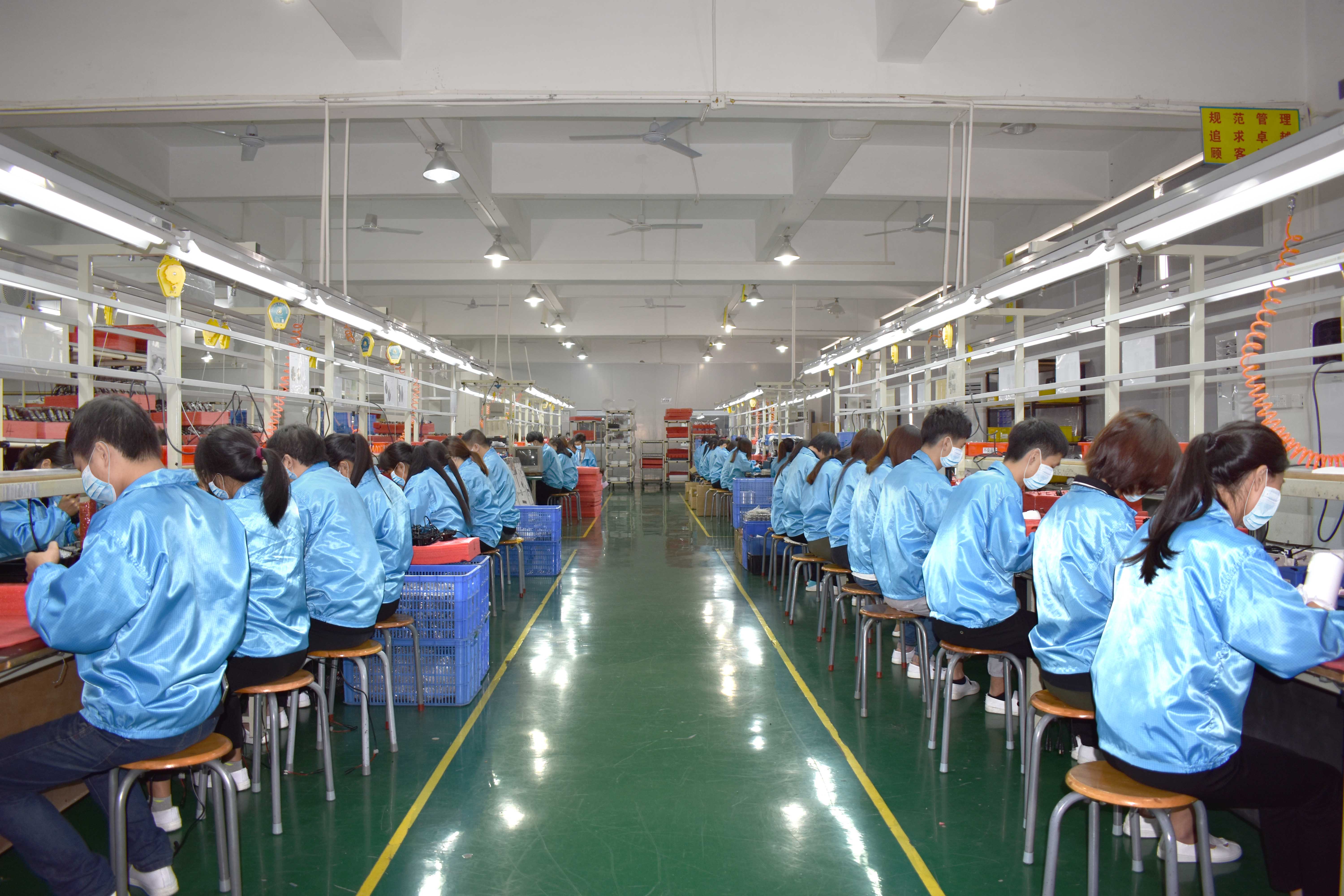
IRLAB Limited has been designing and manufacturing cameras since 1992 and maintains a 3,000m² facility in Shenzhen with an annual output of 6 million units. With 100+ employees, 10+ engineers, ISO9001 quality control, and OEM/ODM support, IRLAB is positioned as a partner for tactical and commercial FPV projects.
Need help matching an FPV camera to your specific drone project?
Contact IRLAB for sample support, quotes, and technical consultation.
Email: sales@irlab.net | WhatsApp: +86 13502860860
Have Questions or Need More Details?
Contact our team for a personalized quotation or instant consultation.
Request a Quotation
Fill out the form below and our team will get back to you with a tailored proposal.
WhatsApp Direct Chat
Prefer to chat in real-time? Message us on WhatsApp for instant assistance & quick answers.
- Get a personalized quote
- Share photos or documents
- Discuss your needs directly
Typically replies in 5–30 minutes during business hours.