
Top FPV Camera Picks for 2026: Analog, Digital, and Thermal Recommendations
Choosing an FPV camera in 2026 is three separate hardware decisions rather than one specification race. Analog FPV cameras remain the fastest, simplest and lowest-cost route to a usable video link; digital FPV cameras exist for programs that need high-frame-rate HD imagery for recording, live review or AI-assisted processing; and thermal FPV cameras serve missions where the useful signal is a heat signature instead of reflected light.
This ranking recommends one model in each of those three categories and states the published specifications behind each pick, along with the situations where a different category is the better answer.
- Analog pick — IRLAB CDD-BS59KU: a 1500TVL analog FPV camera with a published minimum illumination of 0.00001 LUX, aimed at FPV racing and starlight low-light flight.
- Digital pick — IRLAB CDD-BS5JMU: a digital FPV camera delivering 1080p video at 90 fps with 50 ms latency, aimed at high-speed digital video feeds.
- Thermal pick — IRLAB CT-EI5ATC: an uncooled 640×512 thermal detector with NETD ≤30mK, aimed at tactical reconnaissance and military defense programs.
IRLAB Limited is a camera developer and manufacturer founded in Taiwan in 1992 and established in Shenzhen in 2003. The company operates a 3,000m² facility with more than 100 employees, including 10+ engineers, and manufactures under a TüV-certified ISO 9001 quality system.
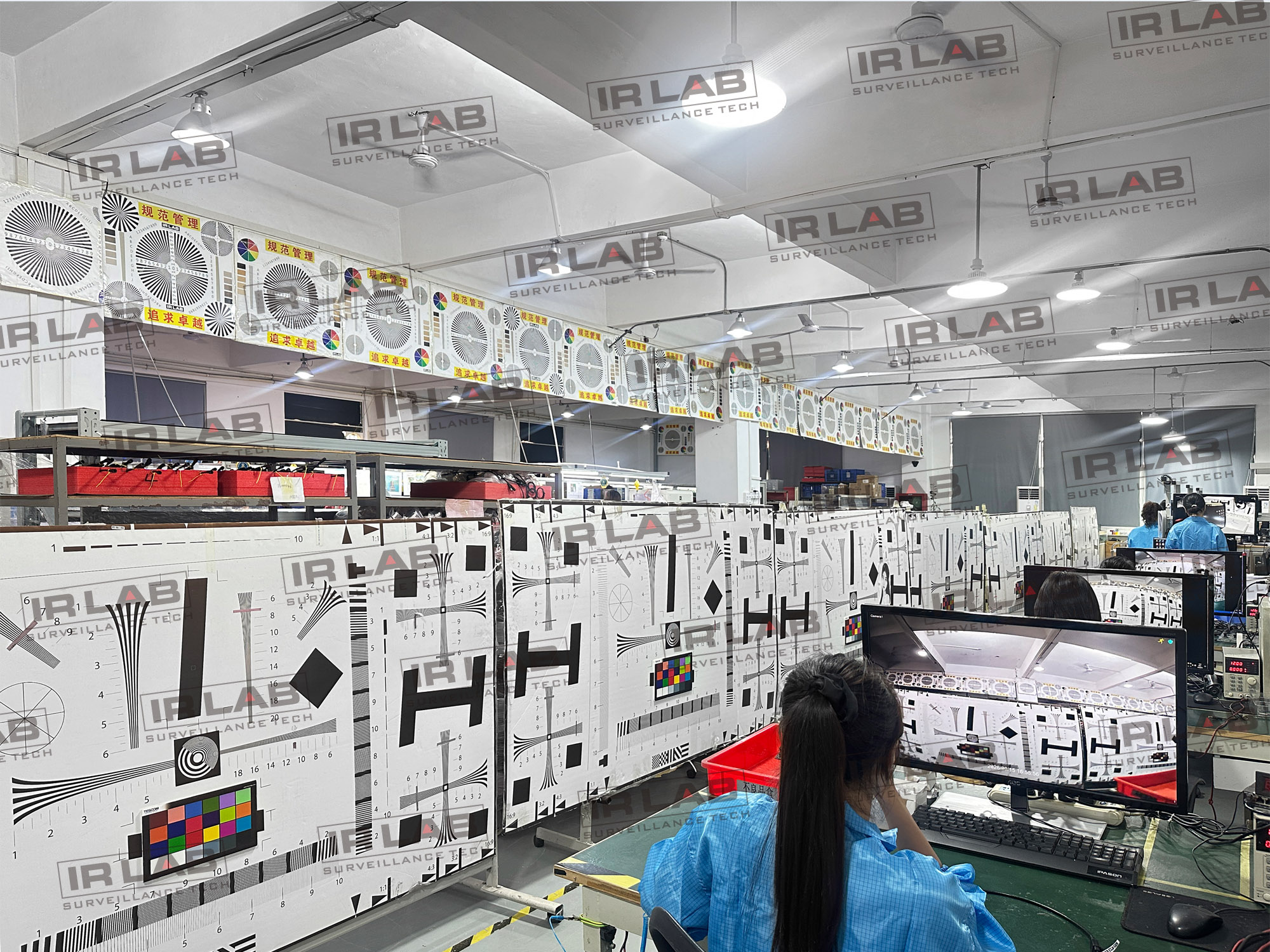
FPV camera image tuning and focus calibration at IRLAB Limited.
Why Most "Best FPV Camera" Lists Are Hard to Use
Generic FPV camera rankings tend to fail procurement teams for four repeatable reasons, and each one is worth fixing before a shortlist is built.
- Categories are treated as interchangeable. An analog camera, a digital HD camera and a thermal camera solve different problems. Ranking them in a single list hides the trade-off that actually decides the purchase: latency versus image detail versus the ability to see without visible light.
- Measurement conditions are not stated. Minimum illumination figures are only comparable when the test conditions are the same. A published figure such as 0.00001 LUX is useful only if the buyer understands it as a supplier-published value for the specific model.
- The camera is only one link in the chain. End-to-end latency, range and image stability also depend on the video transmitter, the antenna set and the goggles or ground station. A camera specification cannot be read in isolation.
- Procurement constraints are ignored. Compliance documentation, manufacturing origin, chip lifecycle and continuity of supply often matter more than a marginal resolution difference.
This article avoids those failures by ranking inside categories, naming the specification that justifies each pick, and stating limitations alongside strengths.
What Is Driving FPV Camera Demand in 2026
Third-party market data indicates that demand for FPV and drone imaging hardware continues to expand, with defence, inspection and industrial applications adding volume on top of consumer and racing segments.
- Fact.MR estimates the global first-person-view camera market at US$ 825.3 million in 2024, with a projected CAGR of 14.7% through 2034 (Fact.MR, FPV camera market report).
- Global Market Insights values the wider drone camera market, including thermal and RGB systems, at USD 13.6 billion in 2025, driven by industrial and defence applications (Global Market Insights, drone camera market).
- Market Research Future projects the thermal camera market growing from USD 5.16 billion in 2024 to USD 10.09 billion by 2035, a CAGR of 6.28% (Market Research Future, thermal camera market report).
- Dedrone, Statista and DroneDJ data place DJI at roughly 74%–83% of the global drone and imaging market in 2025–2026, which is why most FPV camera buyers are sourcing outside that ecosystem (DroneDJ, citing Dedrone and Statista).
Scope matters when reading these numbers. Estimates diverge significantly depending on whether a report counts the full drone assembly, the imaging subsystem or the FPV camera component alone; narrower component-focused research has published figures in the range of US$ 287 million for the specialised FPV drone segment. The figures above should therefore be treated as directional market signals rather than interchangeable measurements.
Regulation is a second demand driver. In the United States, FPV video transmitters typically must comply with FCC Part 15, and uncertified equipment requires a Technician-level amateur radio licence (DroneBlocks / FCC). In late 2025, the FCC added uncrewed aircraft systems and critical components from specific foreign countries to the Covered List under DA 25-1086, a change that directly affects sourcing decisions for US government and defence programmes (Federal Communications Commission).
How These Picks Were Evaluated
The shortlist below was built against six criteria that map to how FPV cameras are actually specified and procured, not to how they are marketed.
- Low-light capability. Published minimum illumination, with starlight-class performance stated explicitly where available.
- Latency. Camera-side contribution to the end-to-end video delay, expressed in milliseconds where published.
- Image detail and frame rate. Analog resolution in TVL, or digital resolution and frame rate in pixels and frames per second.
- Thermal sensitivity. For thermal models: detector resolution, pixel pitch, spectral band and NETD.
- Size, weight and power (SWaP). Physical envelope and power budget, because payload capacity on small FPV airframes is limited.
- Compliance and supply continuity. Documentation availability, manufacturing origin and the supplier's ability to manage component end-of-life.
Only models with published specifications that could be mapped to these criteria were included. Comparison figures against named competitor cameras are presented separately and attributed as supplier-published data.
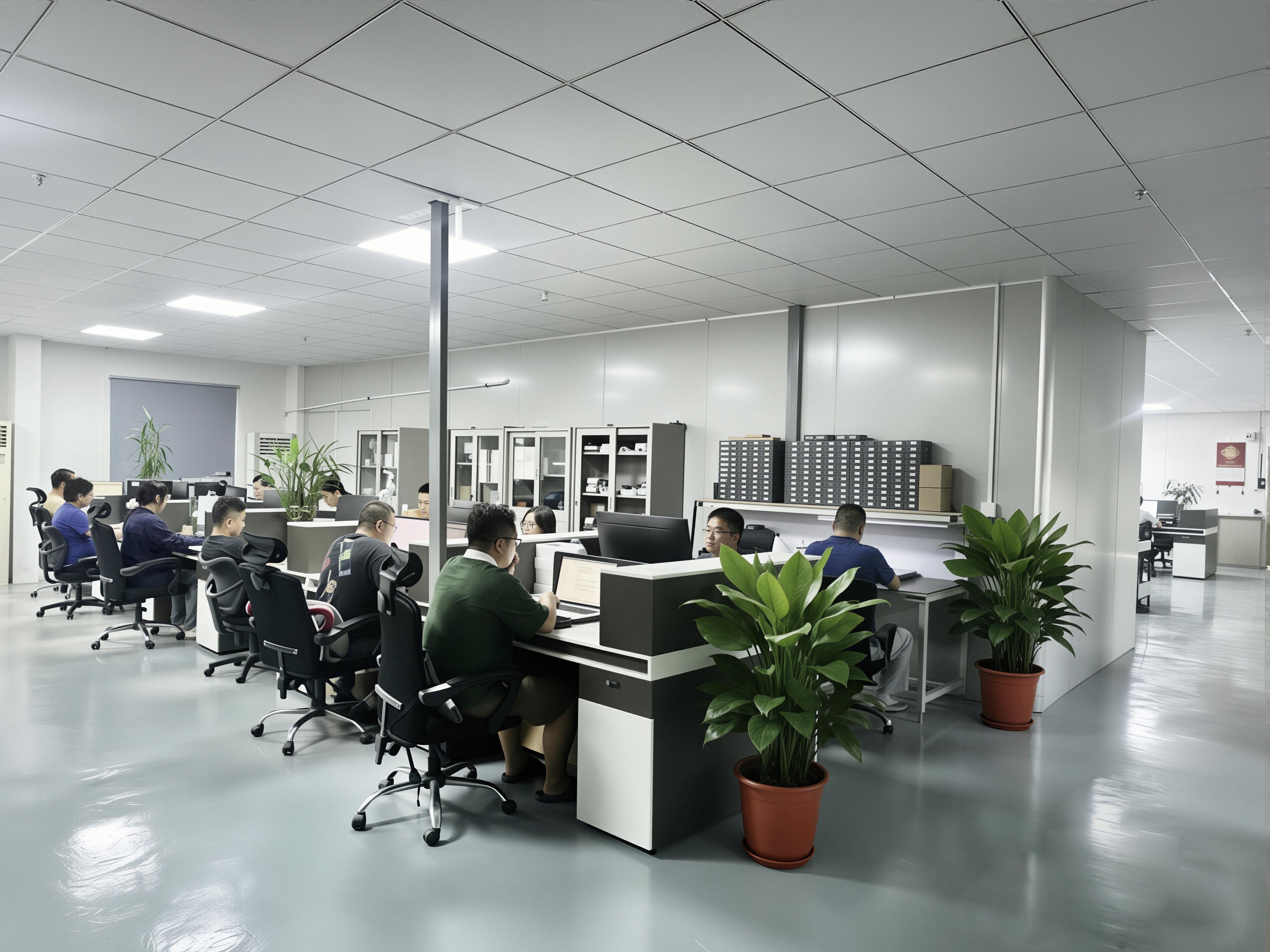
Product department: FPV camera model configuration and production preparation before build.
Picks at a Glance
| Rank in category | Model | Category | Key published specifications | Primary mission fit |
|---|---|---|---|---|
| #1 Analog | IRLAB CDD-BS59KU | Analog FPV Camera | 1500TVL resolution; 0.00001 LUX minimum illumination | FPV racing, starlight and low-light night flight |
| #1 Digital | IRLAB CDD-BS5JMU | Digital FPV Camera | 1080p at 90 fps; 50 ms latency | High-speed digital video feeds, HD recording and analysis pipelines |
| #1 Thermal | IRLAB CT-EI5ATC | Thermal FPV Camera | Uncooled vanadium oxide detector; 640×512; 12µm pixel pitch; NETD ≤30mK; 8–14µm LWIR; 9.1mm lens, 46°×37° FOV | Tactical reconnaissance and military defense programmes |
Analog Pick for 2026: CDD-BS59KU (1500TVL, 0.00001 LUX)
The analog recommendation goes to the CDD-BS59KU because it targets the two constraints that decide analog camera performance in practice: resolution in the analog signal path and minimum illumination.
- 1500TVL resolution, in line with the 1500TVL class that IRLAB publishes for its analog FPV camera line.
- 0.00001 LUX minimum illumination, a starlight-class figure aimed at night operation without added illumination.
- Analog transmission path, which avoids the encoding and decoding stages that digital HD links introduce into the video chain.
- Positioned primarily for FPV racing, where the latency budget is the dominant constraint.
For racing and for buyers whose priority is a low-cost, low-latency link, the analog path stays the default in 2026. The practical benefit of the 0.00001 LUX figure is mission time: a camera that keeps producing a usable image as ambient light falls extends the usable flight window into dusk and night, and supports covert observation without an infrared illuminator.
Where the analog pick is the wrong answer: analog transmission carries SD-class detail, does not provide an onboard HD recording stream, and its image quality depends on the transmitter and goggle chain selected around it. Programs that need HD frames for post-flight review, machine analysis or operator displays should move to the digital category.
Digital Pick for 2026: CDD-BS5JMU (1080p at 90 fps, 50 ms)
The digital recommendation is the CDD-BS5JMU, which addresses the frame-rate and latency balance that high-speed digital feeds depend on.
- 1080p resolution at 90 frames per second, giving more usable frames per second of flight and reducing motion blur during fast passes.
- 50 ms latency, published for the model, which keeps control response usable while carrying an HD signal.
- Suited to high-speed digital video feeds where the operator, the recorder and any downstream compute all consume the same digital stream.
The reason 90 fps matters is not cosmetic. Higher frame rates give tracking and detection pipelines more independent samples of the same target in motion, and they give reviewers sharper individual frames when a flight is analysed after landing. This is the practical link between digital FPV cameras and AI detection or object tracking workloads: the detection and tracking algorithms normally run on an onboard computer or ground station, and the camera's job is to deliver clean, low-noise, low-latency frames to that pipeline.
Where the digital pick is the wrong answer: 50 ms is higher latency than a direct analog link, system cost and power draw are higher, and the camera must be matched to a compatible digital air unit and goggle ecosystem. Pilots competing in tightly contested racing classes still generally prefer analog.
Thermal Pick for 2026: CT-EI5ATC (640×512, NETD ≤30mK)
The thermal recommendation is the CT-EI5ATC, an uncooled thermal FPV camera published for tactical reconnaissance and military applications.
- Uncooled vanadium oxide detector with 640×512 resolution and 12µm pixel pitch.
- NETD ≤30mK at 25°C, with a spectral range of 8–14µm (LWIR).
- 9.1mm lens with a 46°×37° field of view.
- 40g weight and 25.4mm × 25.4mm × 38.8mm dimensions.
- DC 3.9–5.5V input with power consumption of ≤1.2W.
The documented operating environment covers dark night, daylight, high vibration and shock, wide temperature from −38°C to 60°C, electromagnetic interference, dense fog and torrential rain. Its published roles include covert night reconnaissance, no-IR tactical manoeuvres, terminal visual guidance, high-speed penetration, ultra-low latency (<50ms) FPV, precision strike support, smoke and camouflage penetration, heat signature locking, detect-to-engage, search and rescue, real-time battlefield situational awareness, target identification and marking, frontline intelligence transmission, battle damage assessment, and low-light or night environment reconnaissance.
NETD is the specification that separates thermal cameras in practice, because it describes the smallest temperature difference the detector can resolve. A ≤30mK figure supports the detection of low-contrast heat signatures — a person against cool ground, or a vehicle that has recently stopped — which is exactly the scenario where visible-light and starlight cameras stop being useful.
Where the thermal pick is the wrong answer: the output is 640×512 grayscale rather than 1080p colour, so it complements rather than replaces an RGB camera; unit cost is typically the highest of the three categories; and thermal hardware usually sits inside export-control and end-use documentation requirements that must be reviewed at programme level.
Use-Case Fit: Which Pick Fits Which Mission
- FPV racing and time trials: CDD-BS59KU. The analog path keeps latency at the minimum and the 1500TVL resolution matches the class expectation.
- Night flight and covert surveillance: CDD-BS59KU. The 0.00001 LUX minimum illumination is the selection reason, particularly when an active illuminator is undesirable.
- High-speed digital feeds and HD recording: CDD-BS5JMU. 1080p at 90 fps provides the frame density that review and analysis workflows need.
- AI detection and object tracking pipelines: CDD-BS5JMU. The camera supplies the stable digital stream; detection and tracking execute on the compute layer.
- Tactical reconnaissance and military defense programmes: CT-EI5ATC. 640×512 thermal imaging with NETD ≤30mK supports covert night reconnaissance, target identification and marking, and battle damage assessment.
- Indoor assault and confined-space reconnaissance: CT-EI5ATC, where the mission profile calls for heat signature locking and detect-to-engage rather than visible-light detail.
- Bridge, tunnel and structural inspection: the thermal path for detecting heat anomalies, and the analog or digital path for general condition imagery.
- Search and rescue: the thermal path at night or in smoke, with a digital or analog camera for daylight identification.
Comparison Table: Published Performance Deltas vs Named Cameras
The table below reproduces IRLAB's published comparison data for its analog FPV camera platform against named competitor models. These figures are supplier-published rather than third-party verified, and the competitor products are listed only because a published comparison figure exists for them. Buyers should treat the deltas as claims to validate during sample evaluation.
| Compared camera | Published resolution delta | Published minimum illumination delta | Published noise delta | Published initial cost positioning |
|---|---|---|---|---|
| Runcam Nano 2 | 20% higher | 50% improved | 50% less | 10% lower |
| Runcam Phoenix 2 Nite | 10% higher | 20% improved | 30% less | 10% lower |
| Runcam Phoenix2 | 20% higher | 50% improved | 50% less | 20% lower |
| Foxeer Razer | 20% higher | 50% improved | 50% less | 20% lower |
| Foxeer Cat 4 | 20% higher | 50% improved | 50% less | 20% lower |
| Foxeer Cat 3 | 20% higher | 50% improved | 50% less | 20% lower |
| Caddx Ratel 2 | 20% higher | 50% improved | 50% less | 10%–15% lower |
| Caddx Ratel Pro | 10% higher | 20% improved | 30% less | 10% lower |
The same published material also positions the analog platform as requiring zero to less maintenance and delivering higher efficiency than the compared models. Those are qualitative positioning statements rather than measurable specifications, and they are included here for completeness rather than as verified performance data.
Step-by-Step: How to Shortlist and Validate an FPV Camera
- Define the mission profile first. Decide whether the airframe is doing racing, HD video work, night reconnaissance or thermal detection. That single decision eliminates one or two of the three categories immediately.
- Set numeric thresholds for latency and low light. For racing, latency dominates. For night work, the threshold is the minimum illumination figure the mission requires — for example, starlight-class operation in the region of 0.00001 LUX.
- Check payload, power and mechanical fit. Confirm weight, dimensions and voltage against the airframe budget. The thermal pick, for instance, draws ≤1.2W at DC 3.9–5.5V and weighs 40g at 25.4mm × 25.4mm × 38.8mm.
- Verify compliance and origin documentation. Confirm what the destination market requires, including FCC Part 15 considerations for US transmitters, and collect the manufacturing origin and component documentation the programme needs.
- Validate by sample, then plan continuity. Test the specification the mission depends on — illumination, frame rate, latency, NETD — under the expected operating conditions, and confirm how the supplier handles component end-of-life before volume commitment.
Compliance, Origin and the "China-Free" Question
Compliance is decided by the whole system, not by the camera alone. In the United States, an FPV video transmitter is normally expected to comply with FCC Part 15, and uncertified equipment requires a Technician-level amateur radio licence (DroneBlocks / FCC). Since late 2025, the FCC has also added uncrewed aircraft systems and critical components from specific foreign countries to the Covered List under DA 25-1086, which means origin and component traceability now sit inside the compliance review for US programmes (Federal Communications Commission).
For buyers explicitly looking at China-free FPV camera options, the practical answer is documentation rather than a label: request manufacturing origin statements, bill-of-materials traceability and the conformity documents the destination market requires. IRLAB Limited was founded in Taiwan in 1992 and established its Shenzhen operations in 2003, so buyers with origin-sensitive programmes should confirm the current origin and documentation position directly with the supplier for their specific model and programme, rather than assuming it from the company's history.
Supply Continuity: What Happens When a Chip Is Discontinued
Component lifecycle is the risk that turns a good camera choice into a programme delay. IRLAB Limited documents three primary risk types — inconsistent raw material quality, shortage of key materials, and chip production halt — and describes the controls it applies against each.
- Incoming material inspection is completed so that material quality is consistent before it enters production.
- Long-term supply chain relationships provide better supply guarantees during special periods such as allocation or shortage events.
- In-house development capability and industry experience enable faster chip replacement when a part is discontinued.
- Chip lifecycle management files continuously track original manufacturer discontinuation notices and product roadmaps.
- A documented chip replacement SOP reserves compatible package or pin-compatible solutions during new product design, so a future substitution is planned rather than improvised.
- Proactive device replacement drills for mass-produced products shorten the real switchover cycle and produce a closed-loop replacement verification report.
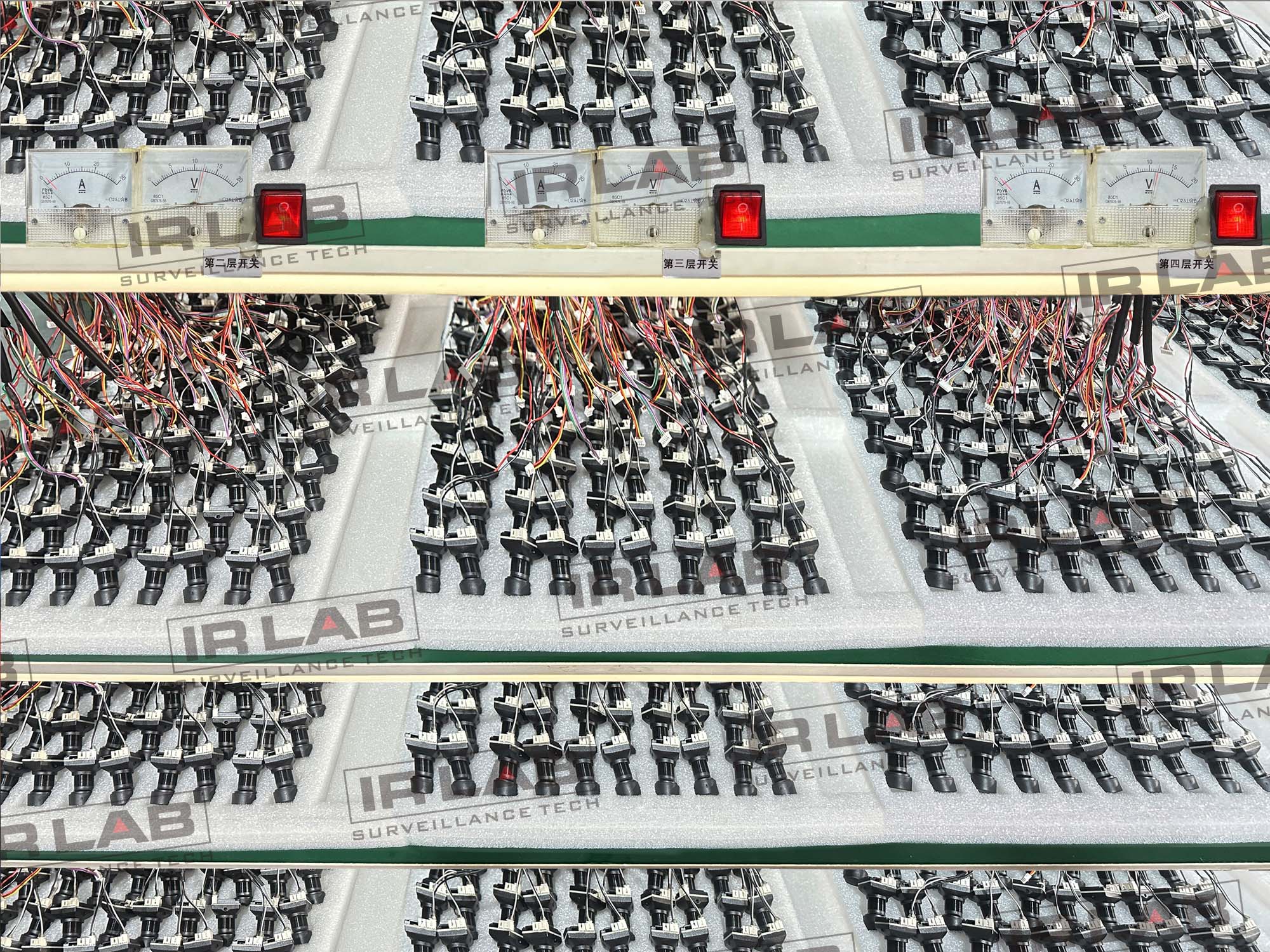
Aging test station used to verify FPV camera stability before shipment.
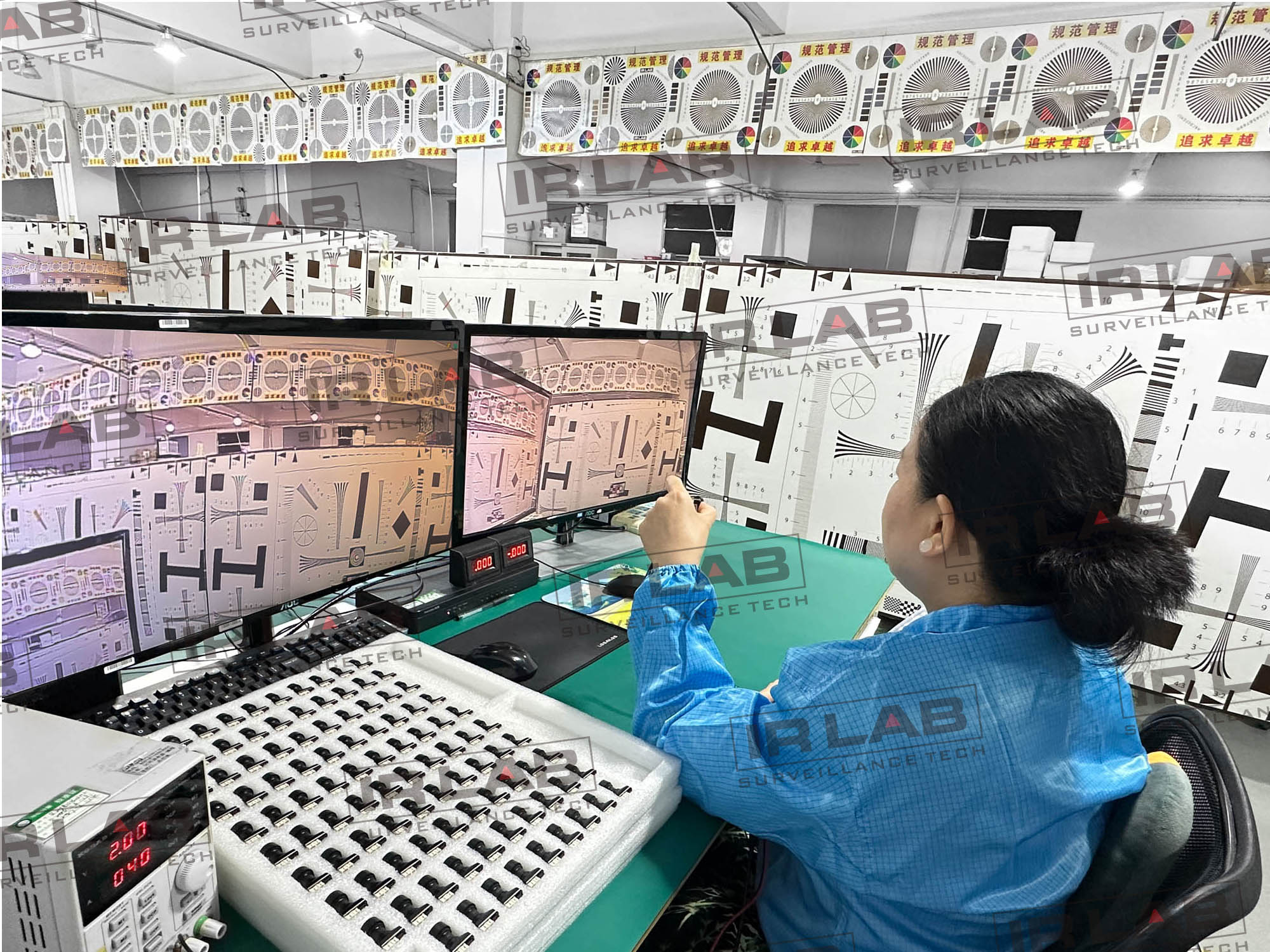
Production line testing: functional verification on the FPV camera assembly line.
FAQ
1. Do the recommended FPV cameras meet US and EU compliance requirements?
Compliance depends on the transmitter, the aircraft and the destination market, not on the camera alone. In the United States, FPV video transmitters typically need to comply with FCC Part 15, and uncertified equipment requires a Technician-level amateur radio licence (DroneBlocks / FCC). Separately, in late 2025 the FCC added uncrewed aircraft systems and critical components from specific foreign countries to the Covered List under DA 25-1086, which affects sourcing for US programmes (Federal Communications Commission). IRLAB Limited manufactures under a TüV-certified ISO 9001 quality system; buyers should request the exact conformity documentation their market and programme require before design freeze.
2. Can IRLAB Limited customise an FPV camera for a specific platform or mission?
IRLAB Limited offers OEM and ODM services with software, hardware, mechanical structure, video image tuning and quality control teams working in house. That structure supports customisation of mechanical fit, video image tuning and interface requirements for a specific platform or mission profile. Requirements should be defined before tooling or firmware freeze, because late changes affect both schedule and validation scope.
3. How do the recommended picks compare on cost?
For the analog platform, IRLAB's published comparison data positions initial cost 10%–20% lower than the named competitor cameras listed in the comparison table, together with zero to less maintenance and higher efficiency positioning; these are supplier-published figures, not third-party verified. Independent of brand, analog systems generally carry a lower total system cost than digital HD or thermal systems because they require less processing hardware, and thermal remains the highest-cost path because of detector cost.
4. How should a buyer validate an FPV camera before committing to volume?
Validate the specification the mission actually depends on. For the CDD-BS59KU that is minimum illumination, published at 0.00001 LUX, together with 1500TVL resolution. For the CDD-BS5JMU it is frame rate and latency: 1080p at 90 fps with 50 ms. For the CT-EI5ATC it is thermal performance and mechanical fit: NETD ≤30mK at 25°C, 12µm pixel pitch, 8–14µm LWIR band, 40g weight and 25.4mm × 25.4mm × 38.8mm dimensions. Test under the operating conditions the programme expects, which for tactical use includes dark night, daylight, high vibration, EMI, dense fog and heavy rain across a −38°C to 60°C range. Sample validation can be arranged by contacting IRLAB Limited at sales@irlab.net.
5. What happens if a chip inside the camera is discontinued or reaches end of life?
IRLAB Limited maintains chip lifecycle management files that track original manufacturer discontinuation notices and product roadmaps, and operates a documented chip replacement procedure that reserves compatible package or pin-compatible options during new product design. For mass-produced products, proactive device replacement drills shorten the actual switchover cycle and generate a closed-loop replacement verification report. Incoming material inspection and long-term supply chain relationships are the controls applied to material quality and shortage risk in parallel.
Conclusion: Which Pick Fits Your Programme in 2026
The three recommendations in this ranking are not competing for the same slot. The CDD-BS59KU wins on latency, cost and starlight-class low light at 0.00001 LUX with 1500TVL resolution, which is why it leads the analog category for racing and night work. The CDD-BS5JMU wins where the video stream has to be digital, HD and fast: 1080p at 90 fps with 50 ms latency supports recording, review and downstream detection or tracking workloads. The CT-EI5ATC wins wherever the target is a heat signature rather than reflected light, with a 640×512 uncooled detector, NETD ≤30mK, a 40g envelope and a documented tactical mission set.
A practical 2026 shortlist therefore starts by choosing the category from the mission, then comparing models only inside that category, then checking compliance documentation and component lifecycle before volume commitment. Buyers who need all three capabilities on one airframe typically specify the thermal camera as the primary sensor and add an analog or digital camera for daylight identification, rather than trying to force a single sensor to cover every mission.
Next Step: Specifications, Samples and Programme Review
IRLAB Limited publishes full technical documentation for its FPV camera range across analog, digital, thermal, AI and night-vision platforms, and supports OEM and ODM programmes with in-house engineering.
Review the company and product specifications in the IRLAB Company Profile & Corporate Brochures, or contact the team directly to discuss sample validation and programme requirements.
Email: sales@irlab.net | Tel: +86 13682444680 | WhatsApp: +8613502860860 | Website: www.irlab.net
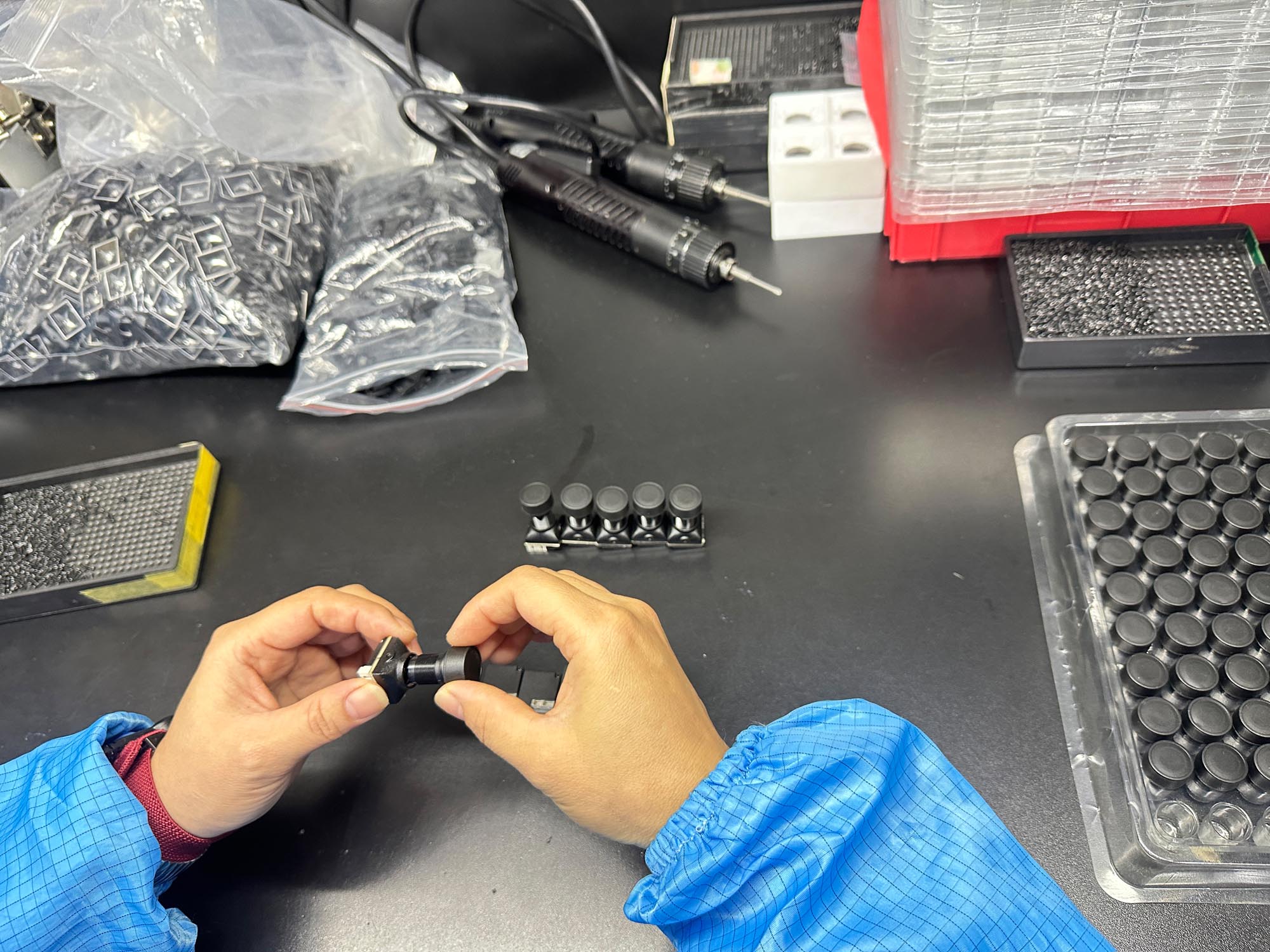
IRLAB Limited FPV camera production line supporting OEM and ODM programmes.
Have Questions or Need More Details?
Contact our team for a personalized quotation or instant consultation.
Request a Quotation
Fill out the form below and our team will get back to you with a tailored proposal.
WhatsApp Direct Chat
Prefer to chat in real-time? Message us on WhatsApp for instant assistance & quick answers.
- Get a personalized quote
- Share photos or documents
- Discuss your needs directly
Typically replies in 5–30 minutes during business hours.