FPV Camera for Tactical Drones: IRLAB's OEM Capabilities
IRLAB Limited is an OEM/ODM FPV camera manufacturer founded in 1992 in Taiwan and established in Shenzhen, China in 2003. The company operates a 3,000m² manufacturing facility with 100+ employees, including 10+ in-house engineers, and reports an annual output of 6 million units. Its product range includes Analog FPV cameras, Digital FPV cameras, and Thermal FPV cameras used in tactical drones, racing drones, RC models, robots, and surveillance systems. This article is written for procurement teams and system integrators at the evaluation-to-execution stage who are assessing IRLAB's FPV camera OEM capabilities: customization depth, third-party integration, certifications, production capacity, and procurement terms.
1. The Problem: Tactical FPV Camera Requirements Exceed Consumer-Grade Specs
Tactical FPV UAV projects place cameras under conditions that most commercial hardware is not designed for. According to IRLAB's product specification, the tactical FPV camera line operates under extreme conditions including dark night, sunshine day, high vibration/shock, a wide temperature range from -38°C to 60°C, EMI environments, dense fog, and torrential rain.
In these conditions the camera is expected to support mission functions such as covert night reconnaissance, no-IR tactical maneuvers, terminal visual guidance, high-speed penetration, ultra-low latency (<50ms) FPV, precision strike support, smoke/camouflage penetration, heat-signature locking, detect-to-engage, and search & rescue.
The procurement implication: a tactical drone program cannot be built from an off-the-shelf catalog alone. The buyer needs a manufacturer that documents the environmental envelope, offers hardware customization (housing, lens, image style), and can integrate third-party AI or wireless transmission modules. These are capability questions, and they are the focus of this article.
2. Industry Background: FPV Camera Market and Regulatory Context
The global First Person View (FPV) camera market is estimated at US$ 825.3 million in 2024, with a projected CAGR of 14.7% through 2034 (Fact.MR). The broader drone camera market, including thermal and RGB systems, was valued at USD 13.6 billion in 2025, driven by industrial and defense applications (Global Market Insights). The thermal camera segment is projected to grow from USD 5.16 billion in 2024 to USD 10.09 billion by 2035, a CAGR of 6.28% (Market Research Future).
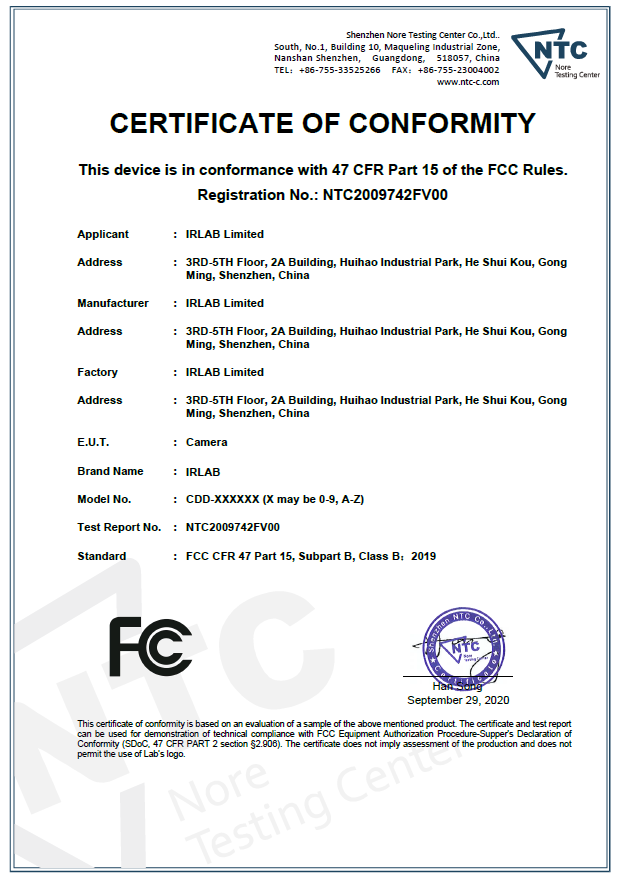
On the regulatory side, FPV video transmitters sold in the U.S. typically require compliance with FCC Part 15 regulations; uncertified equipment requires a Technician-level amateur radio (HAM) license. In late 2025, the FCC added uncrewed aircraft systems (UAS) and critical components from specific foreign countries to its “Covered List” (DA 25-1086) over national security concerns. For international buyers, this increases the importance of documented, component-level compliance and supplier transparency. A manufacturer with existing FCC, CE, UKCA, E-MARK, and ISO certifications provides a documented baseline for market-entry planning.
3. IRLAB Limited: Company Capability Profile
IRLAB Limited is a camera manufacturer founded in 1992 in Taiwan and established in Shenzhen, China in 2003, with over 30 years of experience in camera development and manufacturing. The company maintains a 3,000m² facility, employs 100+ staff including 10+ engineers, and reports an annual output of 6 million units, with 70% of products exported to Europe, USA, Japan, Korea, and Taiwan. Long-term customers include several Fortune 500 enterprises.
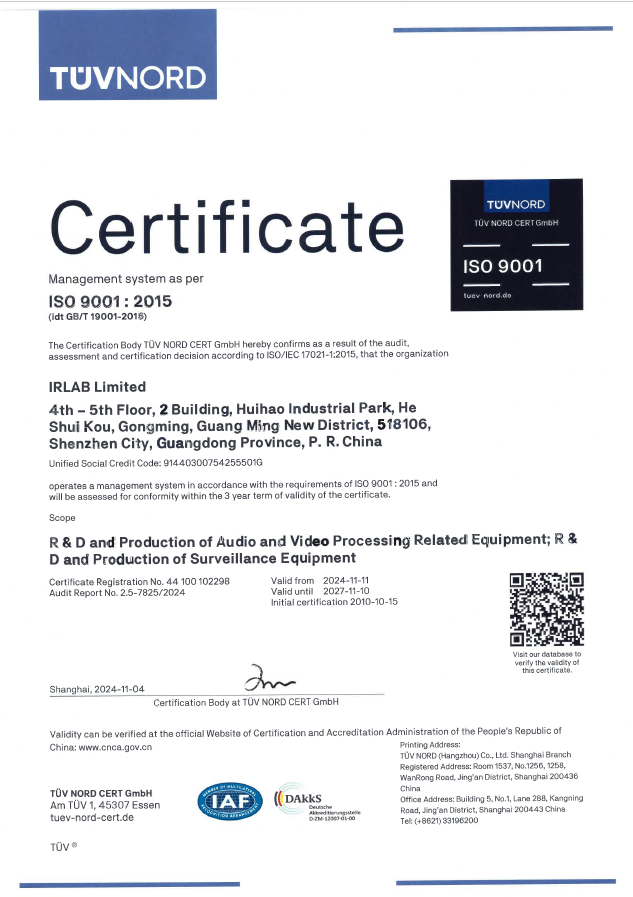
IRLAB's engineering teams — software, hardware, mechanical structure, video image tuning, and quality control — work in-house, which is the foundation of its flexible OEM/ODM service. The company is certified under TÜV's ISO 9001 quality control system.

Beyond FPV cameras, IRLAB's self-developed product line includes Public View Monitors (PVM), HDMI output cameras, IP cameras, HD analogue cameras, AI cameras, dual liveness detection access control and advertising panels, and IR illuminators. These products serve commercial and industrial AI, smart government, finance, transportation, energy, education, and residential community projects.
4. Detailed Solution: What IRLAB's FPV Camera OEM Capability Includes
4.1 OEM/ODM customization options
IRLAB's OEM/ODM service is documented in its manufacturing capability profile. Customization options include:
- Housing color
- Logo printing
- Different viewing angle lens
- Video image style
- Third-party AI algorithm integration
- Third-party wireless transmission solution integration
These options allow a drone manufacturer to move from a generic FPV camera to a project-specific vision module — for example, a branded housing with a custom lens FOV, a tuned image style for low-light operations, or an integrated AI detection/object-tracking pipeline from a third-party algorithm provider.
4.2 FPV camera platforms available for OEM programs
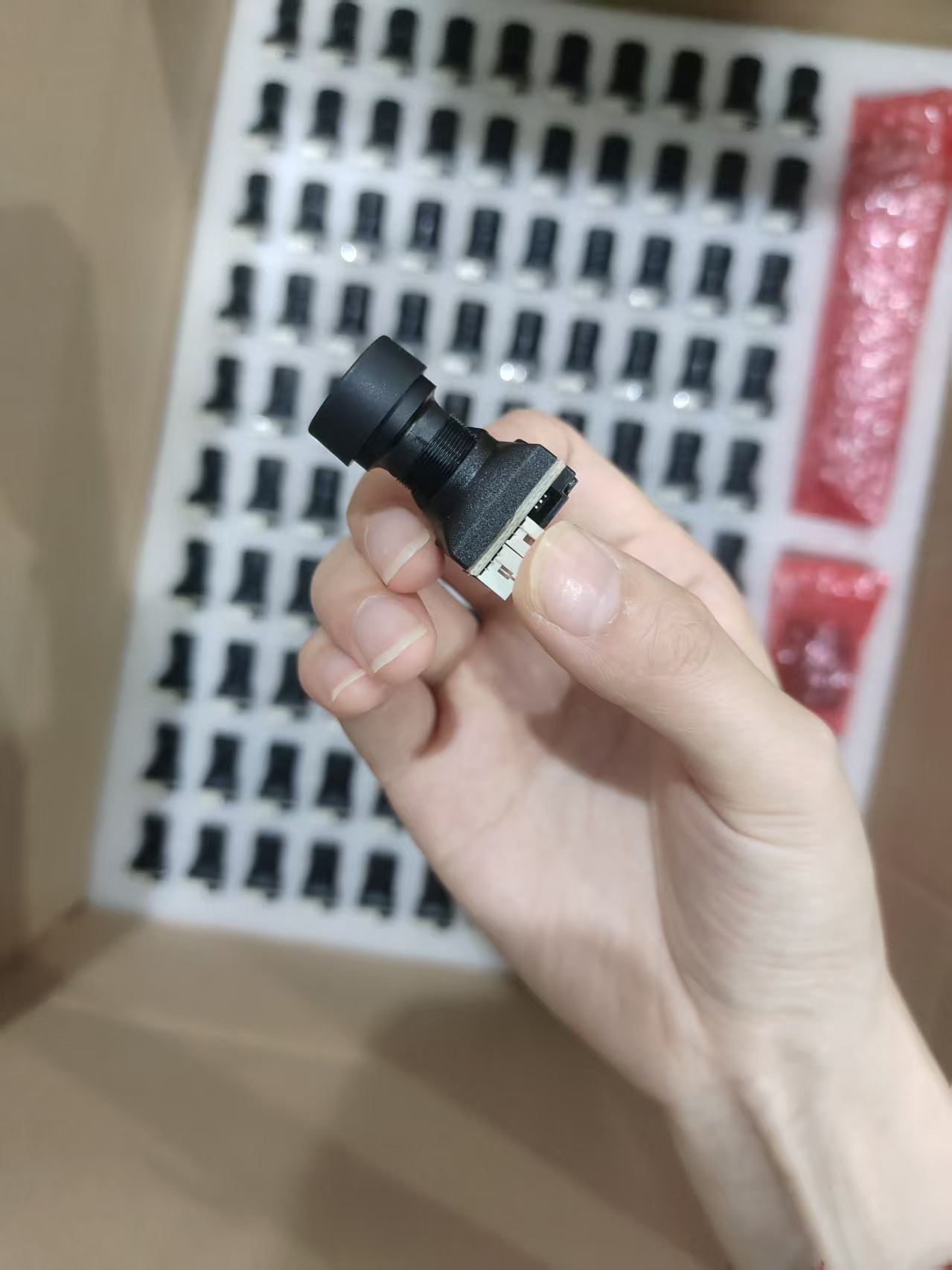
Analog FPV cameras (starlight-grade). The CDD-BS59KU model provides 1500TVL resolution in a 4:3 image format with a minimum illumination of 0.00001 lux, a 120° FOV, CVBS video output, 3DNR noise reduction, DC4.5V–27V wide power input, 0.6W power consumption, and a 19mm × 19mm × 27mm housing weighing 9g. The CDD-BS59KP model provides the same 1500TVL resolution in 16:9 format with a minimum illumination of 0.00002 lux and 0.5W power consumption. Both use an aluminum-alloy housing and glass+plastic lens, and are applied in RC models, racing drones, tactical drones, military drones, AI detection, drone tracking, low-latency systems, and RC cars.
Digital FPV camera (HD, low latency). The CDD-BS5JMU digital FPV camera uses a SONY sensor and supports 3840×2160@30fps, 1080p@90fps, and 720p@120fps video. It operates at 9–30V (normal 5.4W, max 9W), transmits in the 5.1GHz–5.8GHz band (≤29dBm FCC / ≤20dBm CE at 5.8GHz), and delivers 50ms glass-to-glass latency. It features a 120° FOV, MSP and MAVLINK OSD protocol support, 2T2R antenna, a main board of 32×32×19.3mm with fan, camera dimensions of 19×19×26mm, a TF card slot supporting up to 1TB recording, and a total weight of 32g (9g camera + 23g board with fan).
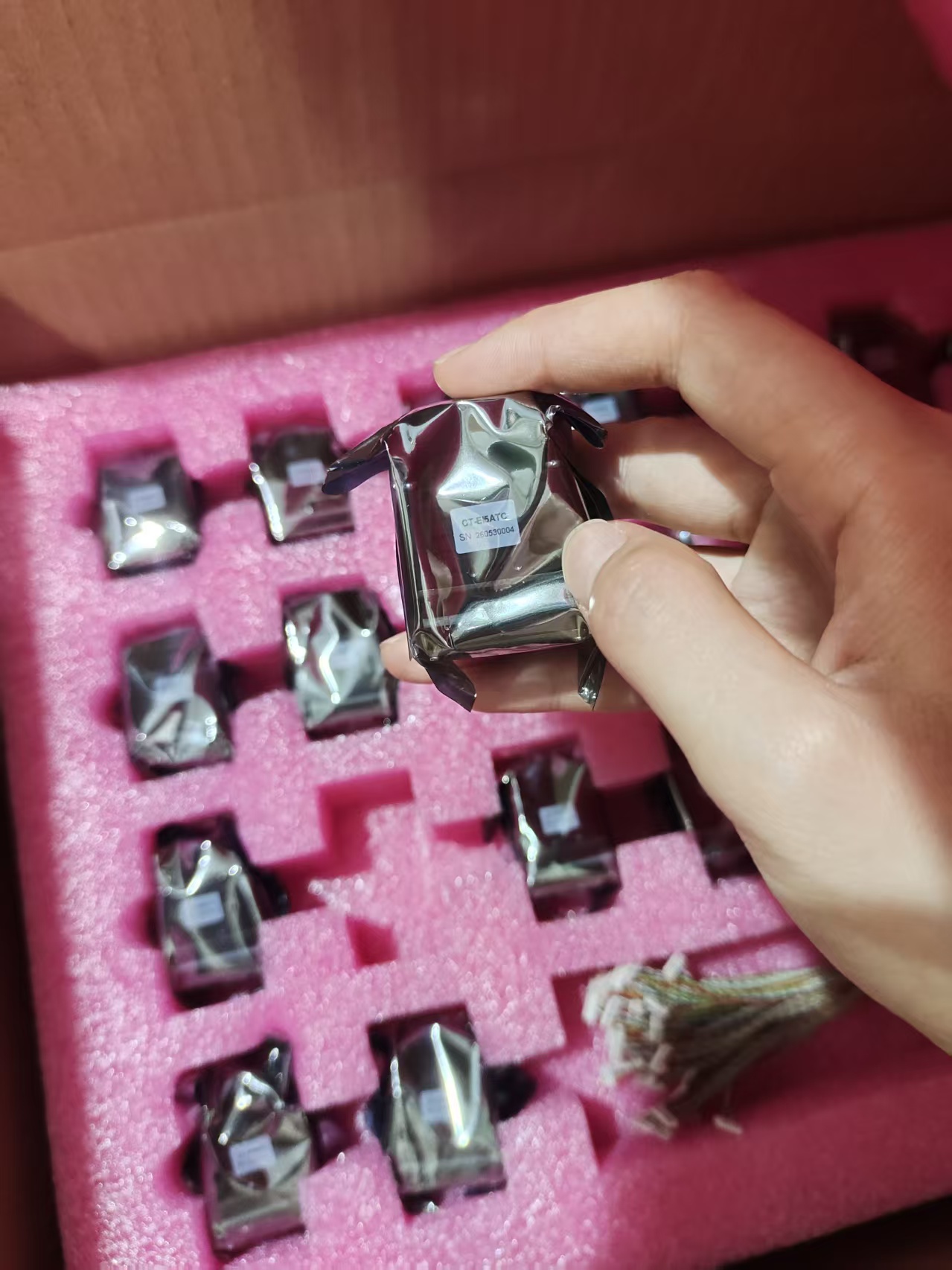
Thermal FPV cameras (uncooled VOx). The CT-EI5ATB (384×288) and CT-EI5ATC (640×512) thermal FPV cameras use uncooled vanadium oxide detectors with 12μm pixel pitch, 8–14μm spectral range, and NETD ≤30mK@25°C. Both include a 9.1mm lens (46°×37° FOV), CVBS / MIPI (optional +UVC) video output, UART/USB communication, DC3.9–5.5V input, ≤1.2W power consumption, 25.4mm × 25.4mm × 38.8mm dimensions, and 40g weight. Operating temperature is -20°C to 60°C, and storage temperature is -45°C to 65°C. These are specified for military and defense, tactical reconnaissance, border patrol, mining, public security, emergency rescue, fire service, and wildlife conservation.
4.3 Production capacity, quality control, and warranty
IRLAB's FPV camera production capacity is 500,000 units per month, with an annual output of 6 million units. Quality control follows a 100% production check plus AQL-standard outgoing quality check (OQC) procedure. After-sales support includes a 2-year warranty period. Payment terms are T/T in advance: 30% deposit when the formal order is placed, and 70% balance before shipment. Delivery methods are FCA Shenzhen or C&F Hong Kong.
4.4 Certification and compliance documentation
For international market entry, IRLAB holds the following documented certifications for its FPV camera products:
| Certification | Market | Standard / Scope | Certificate No. |
|---|---|---|---|
| FCC | USA | FCC CFR 47 Part 15 Subpart B Class B:2019 (Camera, FPV Camera) | NTC2009742FV00 |
| CE | EU | EN 55032; EN 61000-3-2; EN 61000-3-3; EN 55035 (Camera, FPV Camera) | NTC2006705EV00 |
| UKCA | UK | BS EN 55032:2015/A1:2020; BS EN 55035:2017/A11:2020 (CCTV / FPV Surveillance Camera) | SZNTC2204712EV00 |
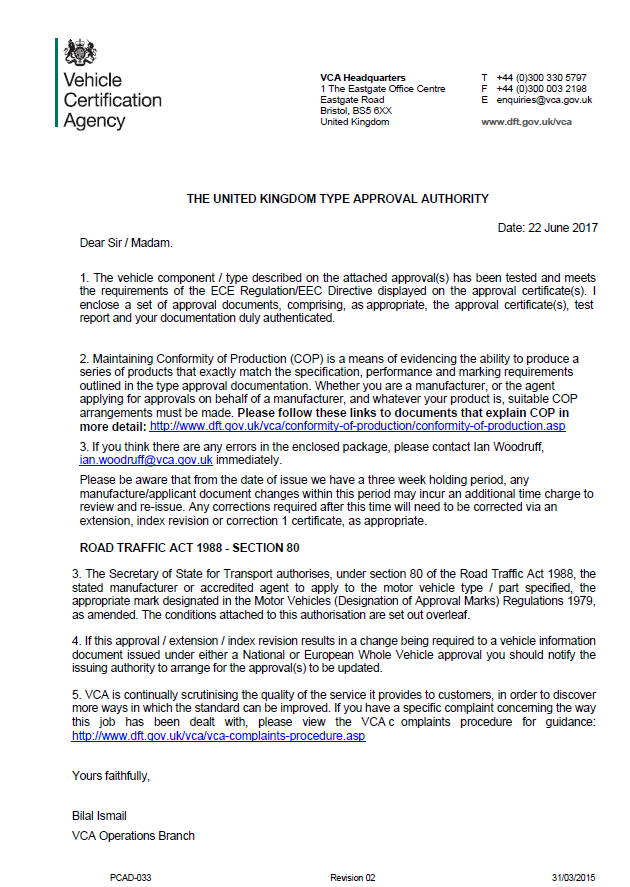
| E-MARK E11 | ECE, UK | ECE R10 (Vehicle on-board camera / FPV onboard vehicle camera) | 10R-048329 |
| UL | USA, CA | UL 60950-1; CAN/CSA C22.2 No. 60950-1-07 (Camera, FPV Camera) | 20170803-E494081 |
| RCM (CTICK) | AU, NZ | AS/NZS CISPR 22:2002 Class B (Dome Camera, FPV Camera) | RSZA05061052-9 |
| RoHS | EU | RoHS Directive 2011/65/EU Annex II (CCTV Camera, FPV Surveillance Camera) | ESTSZ130402233R |
| ISO 9001:2015 | Global | R&D and Production of Audio & Video Equipment, Surveillance & FPV Camera (TÜV) | 44100102298 |
Buyers exporting to the U.S. should note the FCC regulatory framework: FPV video transmitters typically require FCC Part 15 compliance, and in late 2025 the FCC added UAS and critical components from specific foreign countries to its “Covered List.” IRLAB's Shenzhen manufacturing base is in China; procurement teams with origin or “China-free” sourcing mandates should verify component-level origin and compliance documentation directly with the supplier before order placement.
5. Step-by-Step: How an OEM FPV Camera Program Runs at IRLAB
- Define the mission profile. The buyer specifies the operating environment (e.g., dark night, sunshine day, vibration, -38°C to 60°C, EMI, fog, rain) and the required functions (e.g., covert reconnaissance, no-IR operation, terminal guidance, <50ms latency, heat-signature detection, detect-to-engage, search & rescue).
- Select the baseline platform. Choose from Analog FPV (CDD-BS59KU 4:3 / CDD-BS59KP 16:9), Digital FPV (CDD-BS5JMU), or Thermal FPV (CT-EI5ATB 384×288 / CT-EI5ATC 640×512) depending on video output, resolution, latency, and sensing requirements.
- Apply customization and third-party integration. IRLAB supports housing color, logo printing, different viewing angle lenses, video image style tuning, third-party AI algorithm integration, and third-party wireless transmission solution integration.
- Validate with samples. The MOQ is 1 unit. Small-quantity orders are delivered immediately, allowing the buyer to test the camera in the actual drone and mission environment.
- Scale to production. Monthly capacity is 500,000 units. For large quantities, lead time is 15–25 working days after receiving the deposit.
- QC, payment, and shipment. Every unit passes a 100% production check plus AQL-standard OQC. Payment is T/T in advance (30% deposit, 70% before shipment). Delivery is FCA Shenzhen or C&F Hong Kong, and the product carries a 2-year warranty.
6. Use Cases: Tactical, Low-Light, Thermal, and AI-Driven Missions
IRLAB positions this camera line for tactical FPV UAV projects. The documented operating envelope — dark night, sunshine day, high vibration/shock, -38°C to 60°C, EMI, dense fog, torrential rain — supports roles such as covert night reconnaissance, no-IR tactical maneuvers, terminal visual guidance, high-speed penetration, ultra-low latency (<50ms) FPV, precision strike support, smoke/camouflage penetration, heat-signature locking, detect-to-engage, and search & rescue.
Field case. A Ukraine-based FPV drone manufacturer used IRLAB cameras in its FPV drones, with an order volume of 30K units over a one-year period. According to the case record, operating at sensitivity levels as low as 0.00001 lux — a regime where conventional vision systems are effectively blind — the camera enabled the drone to accurately identify, lock onto, and track targets under extreme low-light or zero-light conditions. The customer highlight: delivering clear video imagery in very dark night conditions where conventional cameras produce noise-only output.
Beyond tactical programs, the same platforms serve FPV racing, RC cars, intelligent robots, and surveillance/reconnaissance equipment. The digital platform's MSP/MAVLINK support and recording function fit automated drone operations, while the thermal platforms add fire service, border patrol, and wildlife conservation use cases.
7. Comparison: Choosing the Right IRLAB FPV Camera Platform
The table below compares IRLAB's five FPV camera models using the manufacturer's published specifications. This is a decision aid for OEM engineers selecting a baseline before customization.
| Project requirement | Recommended model | Basis |
|---|---|---|
| Ultra-low-light analog vision, 4:3 | Analog FPV Camera CDD-BS59KU | 1500TVL; 0.00001 lux; CVBS; 3DNR; 120° FOV; 9g |
| Ultra-low-light analog vision, 16:9 | Analog FPV Camera CDD-BS59KP | 1500TVL; 0.00002 lux; 16:9; 0.5W; 120° FOV |
| HD digital video with recording and OSD | Digital FPV Camera CDD-BS5JMU | 4K@30fps / 1080p@90fps; 50ms glass-to-glass; MSP/MAVLINK; TF up to 1TB |
| Thermal detection, lower resolution | Thermal FPV Camera CT-EI5ATB | 384×288 uncooled VOx; 12μm; NETD ≤30mK; 40g |
| Thermal imaging, higher resolution | Thermal FPV Camera CT-EI5ATC | 640×512 uncooled VOx; same core; higher spatial detail |
For budget-conscious evaluations, the analog platforms combine low power consumption (0.5W–0.6W), wide input voltage (DC4.5V–27V), and an MOQ of 1 unit, which keeps the cost of validation low before volume commitment.
8. FAQ
Q1: Does IRLAB hold compliance certifications for FPV cameras?
Yes. IRLAB's FPV cameras are covered by FCC (CFR 47 Part 15 Subpart B Class B:2019, cert NTC2009742FV00), CE (EN 55032 / EN 61000-3-2 / EN 61000-3-3 / EN 55035, cert NTC2006705EV00), UKCA (BS EN 55032:2015/A1:2020 and BS EN 55035:2017/A11:2020, cert SZNTC2204712EV00), E-MARK E11 (ECE R10, cert 10R-048329, covering vehicle on-board and FPV onboard vehicle cameras), UL (UL 60950-1, cert 20170803-E494081), RCM/CTICK (AS/NZS CISPR 22:2002 Class B, cert RSZA05061052-9), and RoHS (cert ESTSZ130402233R). The quality management system is ISO 9001:2015 certified by TÜV (cert 44100102298, valid 2024-11-11 to 2027-11-10).
Q2: What OEM/ODM customization options does IRLAB offer for FPV cameras?
IRLAB's documented customization options are housing color, logo printing, different viewing angle lens, video image style, third-party AI algorithm integration, and third-party wireless transmission solution integration. These are supported by in-house software, hardware, mechanical structure, video image tuning, and quality-control engineers.
Q3: Can IRLAB integrate third-party AI algorithms or wireless transmission modules?
Yes. Third-party AI algorithm integration and third-party wireless transmission solution integration are both listed as standard OEM/ODM customization options. This allows customers to build AI-detection FPV cameras, object-tracking FPV cameras, or custom low-latency digital FPV systems on IRLAB's analog, digital, or thermal hardware platforms.
Q4: What is IRLAB's MOQ and how are OEM payments structured?
IRLAB's MOQ is 1 unit. Payment terms are T/T in advance: 30% deposit when the formal order is placed and 70% balance before shipment. The low MOQ lets buyers validate the camera before scale, which makes IRLAB a practical choice for budget-conscious programs that still require documented quality control.
Q5: Can I request an FPV camera sample for evaluation?
Yes. With an MOQ of 1 unit, sample evaluation is the first unit of an order. Small-quantity orders are delivered immediately, so the sample can be tested against the mission profile — for example, 0.00001 lux starlight sensitivity (CDD-BS59KU), 50ms glass-to-glass latency (CDD-BS5JMU), or thermal NETD ≤30mK (CT-EI5ATB / CT-EI5ATC).
Q6: What is the lead time for mass production, and what capacity does IRLAB have?
Small quantities are delivered immediately. Large quantities ship within 15–25 working days after receiving the deposit. IRLAB's monthly capacity is 500,000 units, backed by 100% production check plus AQL-standard OQC and a 2-year warranty. To request a sample, obtain an OEM quote, or download the company profile and corporate brochure, contact IRLAB Limited: sales@irlab.net, +86 13682444680, or WhatsApp +86 13502860860.
9. Conclusion: Evaluating IRLAB as Your FPV Camera OEM Partner
IRLAB Limited is an OEM/ODM FPV camera manufacturer with a documented capability set for tactical drone programs: in-house engineering, analog/digital/thermal platforms, third-party AI and wireless integration, multiple market certifications, and a 500,000-unit monthly capacity with a 1-unit MOQ. For buyers at the evaluation-to-execution stage, the practical path is to define the mission profile, select a baseline platform, request a sample, and scale after validation.
Request a sample, OEM quote, or catalog.
IRLAB Limited · Email: sales@irlab.net · Tel: +86 13682444680 · WhatsApp: +86 13502860860
Download the IRLAB Company Profile & Corporate Brochure (PDF)
Have Questions or Need More Details?
Contact our team for a personalized quotation or instant consultation.
Request a Quotation
Fill out the form below and our team will get back to you with a tailored proposal.
WhatsApp Direct Chat
Prefer to chat in real-time? Message us on WhatsApp for instant assistance & quick answers.
- Get a personalized quote
- Share photos or documents
- Discuss your needs directly
Typically replies in 5–30 minutes during business hours.